The Israel Lobby and U.S. Foreign Policy
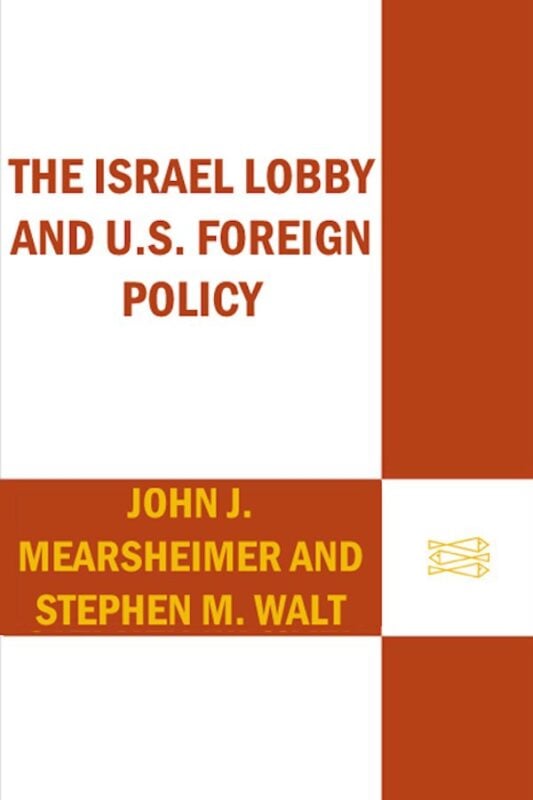
The Israel Lobby and U.S. Foreign Policy by John J. Mearsheimer and Stephen M. Walt investigates the persistent and extraordinary alignment of American policy with Israeli interests, asking how this relationship took root, which forces sustain it, and what consequences emerge for American security and regional stability. The book initiates its argument by detailing the magnitude of U.S. financial, diplomatic, and military support to Israel. American aid has reached nearly $154 billion (in 2005 dollars), distributed primarily as direct grants rather than loans, positioning Israel as the largest cumulative recipient of American foreign assistance since the mid-1970s. This outpouring of resources stems from deep-seated political and institutional commitments forged across decades, but such support intensifies in the wake of critical events, legislative decisions, and the activities of key lobbying organizations.
Defining the Israel Lobby
A distinct coalition underpins the pro-Israel orientation of U.S. foreign policy. The Israel lobby consists of a network of individuals and organizations whose primary goal involves advancing Israeli interests within the American political system. This configuration resists simple characterization as a monolithic movement. Instead, its members—both Jews and non-Jews, including a significant contingent of Christian Zionists—share the objective of strengthening the U.S.-Israel bond and channeling policy decisions in a direction favorable to Jerusalem. Principal organizations such as the American Israel Public Affairs Committee (AIPAC) execute coordinated campaigns in Congress, the executive branch, and the media, rewarding supportive policymakers and leveraging strategic alliances with think tanks and interest groups. These activities take form within the robust tradition of American democratic engagement, yet the lobby’s success manifests in unique ways: its scope, sustained intensity, and the centrality of Israel in America’s Middle East posture.
Material Support and Diplomatic Shield
The operational influence of the lobby surfaces in the consistency and scope of American aid. U.S. policymakers allocate billions annually to Israel in economic and military assistance. Israel receives highly favorable terms, such as grants rather than loans, and retains substantial latitude over the use of American funds. Congress frequently authorizes additional support packages in moments of crisis or during peace negotiations, strengthening Israel’s military edge and economic stability.
Diplomatic backing constitutes another pillar of the special relationship. The United States frequently uses its veto power in the United Nations Security Council to block resolutions critical of Israel. American diplomats intervene in international forums, shield Israel from sanctions, and foster bilateral and multilateral agreements that consolidate Israel’s legitimacy and deterrent capabilities. These actions secure Israel’s regional status and afford it a unique position among American allies.
Political Consensus and Campaign Dynamics
Support for Israel occupies a central position in U.S. political discourse. Candidates for high office regularly express unambiguous commitments to Israel’s security, echoing the rhetoric of shared values and common purpose. Public events, campaign speeches, and policy statements reaffirm this alignment, with presidential contenders often competing to articulate the strongest assurances of solidarity with Israel. The lobby exerts significant influence over the flow of campaign contributions, creating clear incentives for politicians to maintain or intensify their pro-Israel positions. This political environment shapes legislative agendas, foreign aid authorizations, and executive policy directives, producing a consensus that rarely admits dissent or significant critique.
Strategic Imperatives and Shifting Realities
The strategic calculus underpinning the U.S.-Israel alliance has evolved. Israel’s status as a Cold War asset once anchored American calculations, with its military prowess seen as a bulwark against Soviet expansion and instability in the Middle East. Over time, as global threats and regional alliances shifted, the rationale for prioritizing Israel transformed. The book asserts that Israel’s role now entails greater risk than benefit for American strategic interests, complicating relationships with key Arab partners, fostering anti-American sentiment, and constraining U.S. freedom of action in the region. The ongoing occupation of Palestinian territories and recurrent military confrontations contribute to regional volatility and heighten the challenges faced by American policymakers seeking to address terrorism, nuclear proliferation, and energy security.
Moral Narratives and Public Discourse
The moral case for robust U.S. support draws upon Israel’s democratic identity and the history of Jewish persecution, especially the legacy of the Holocaust. American leaders frequently invoke themes of shared values, resilience, and the defense of democracy to justify assistance and alliance. Mearsheimer and Walt interrogate these narratives by analyzing Israel’s conduct in the Occupied Territories, its military campaigns, and the treatment of Palestinians. The book presents evidence that, despite the strength of these moral arguments, the realities of occupation, settlement expansion, and conflict complicate claims of an unqualified ethical imperative.
The lobby actively shapes public and media discourse around these themes, responding swiftly to criticism and framing debates in terms of existential threats to Israel and shared Western values. Accusations of anti-Semitism or disloyalty frequently target those who question the lobby’s influence or criticize Israeli policies, dampening open debate and narrowing the spectrum of acceptable viewpoints in American political life.
Suppressing Dissent and Managing Critique
The operational strategy of the lobby includes marginalizing critics and shaping perceptions within both elite and mass audiences. High-profile figures who challenge prevailing policies—such as former President Jimmy Carter—encounter campaigns to discredit their motives and impugn their reputations. Public intellectuals, journalists, and academics face professional risks for advancing arguments that run counter to established narratives. These patterns of response reinforce the boundaries of political conversation and limit the emergence of alternative policy approaches.
Surveys and public opinion research indicate that a substantial segment of the American population recognizes the lobby’s influence and expresses reservations about the costs and consequences of uncritical support. This awareness, however, seldom translates into substantive policy change, as the structure of incentives for policymakers remains closely tied to the interests advanced by the lobby and its allied organizations.
Influence on Regional Policy and American Strategy
The Israel lobby shapes not only the bilateral relationship but also the broader contours of American policy across the Middle East. Its influence surfaces in U.S. approaches to the Israeli-Palestinian conflict, where Washington often refrains from pressuring Israel to halt settlement activity or make concessions, even when doing so might facilitate peace negotiations or stabilize the region. American policy toward Iran bears the imprint of Israeli preferences, as successive administrations pursue confrontational strategies, impose sanctions, and resist diplomatic openings favored by other actors.
The lobby’s impact extends to moments of war and crisis, as demonstrated during the 2006 Lebanon War, where American support for Israeli military actions defined U.S. engagement and shaped subsequent regional alignments. In each case, the alignment of American and Israeli interests reflects the cumulative effect of lobbying, coalition-building, and public advocacy.
American Interests and Policy Recommendations
The authors identify core American interests in the Middle East: regional stability, counterterrorism, energy security, nonproliferation, and the advancement of democratic norms. They argue that unconditional support for Israel, as currently structured, often undermines these interests. The book advocates recalibrating the relationship, proposing that U.S. aid and diplomatic support should become conditional on policy shifts—particularly regarding settlement construction, occupation, and the pursuit of a two-state solution.
A strategy of “offshore balancing” emerges as the recommended framework, where the United States remains committed to Israel’s security in existential crises while recalibrating its day-to-day policies to reflect broader regional imperatives. By pursuing a more balanced approach, American policymakers can better align resources and priorities, reducing the incentives for regional antagonists to exploit U.S.-Israel ties and restoring credibility among Arab and Muslim populations.
Origins and Scholarship
The argument draws upon a broad body of academic and journalistic literature addressing interest groups, ethnic lobbies, and U.S. foreign policy. The book synthesizes archival research, policy analysis, interviews, and contemporary reportage to document the evolution of the lobby’s influence. Israeli historians and American Jewish sources play a critical role in substantiating claims, demonstrating the existence of robust internal debate within both Israeli society and the American Jewish community regarding the wisdom and consequences of existing policies.
The authors situate their work within a tradition of scholarly engagement with the mechanisms of influence in American politics, emphasizing that the Israel lobby’s methods mirror those of other interest groups, but its results achieve a scale and durability unmatched in the domain of foreign policy. They credit the work of previous scholars while extending the analysis to encompass the contemporary realities of war, occupation, and evolving geopolitical threats.
Legacy and Debate
The Israel Lobby and U.S. Foreign Policy sparked immediate controversy upon its publication, drawing both fierce criticism and strong endorsements. Public debate intensified as reviewers, journalists, and foreign policy analysts assessed the implications of the book’s claims. Some critics attacked the authors for alleged factual errors or questioned their motives, while others welcomed the challenge to conventional wisdom and called for greater transparency and debate.
The publication catalyzed a shift in the terms of public conversation about America’s role in the Middle East, as journalists and political leaders confronted questions of interest-group influence, regional security, and the boundaries of political debate. The ongoing relevance of the book’s analysis emerges in policy discussions, legislative debates, and academic research focused on the future of U.S.-Israel relations and the quest for sustainable peace in the region.
Recalibrating the Relationship
The authors conclude by mapping out a path for more constructive engagement, arguing that American and Israeli interests converge most strongly in scenarios that promote long-term peace, regional stability, and adherence to democratic principles. They urge policymakers to treat Israel as a valued ally rather than an exceptional case, making aid and support contingent upon behaviors that advance both American values and strategic goals.
Structural changes in the relationship require public willingness to engage in open debate, policymakers committed to reassessing entrenched positions, and a new understanding of American interests in a rapidly changing Middle East. The Israel lobby’s influence remains a significant feature of American politics, but the capacity for recalibration resides within the institutional frameworks and traditions of American democracy.
By tracing the evolution of the special relationship, documenting its practical effects, and analyzing its underlying mechanisms, The Israel Lobby and U.S. Foreign Policy presents a comprehensive, empirically grounded assessment that demands attention from scholars, citizens, and policymakers seeking to understand the intersections of domestic politics, interest-group activity, and global strategy.


About the Book