Faustian Bargains: Lyndon Johnson and Mac Wallace in the Robber Baron Culture of Texas
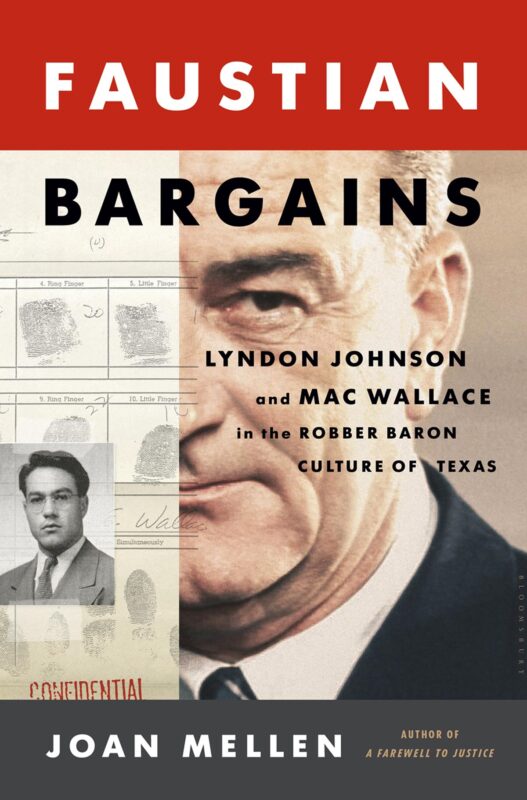
Faustian Bargains: Lyndon Johnson and Mac Wallace in the Robber Baron Culture of Texas by Joan Mellen uncovers the clandestine networks surrounding Lyndon B. Johnson, tracing his ascent through a web of political favors, corruption, and strategic alliances. The book centers on two pivotal figures—Mac Wallace and Billie Sol Estes—whose stories expose the inner mechanics of Johnson’s power and reveal the destructive consequences of loyalty traded for influence.
Origins in Texas Power Culture
Lyndon B. Johnson emerged from a culture defined by violent individualism and systemic patronage. Texas, shaped by frontier mythology and oil fortunes, bred politicians fluent in personal transactions over ideological conviction. Johnson's political formation began in the office of Congressman Richard Kleberg, whose absenteeism allowed Johnson to control the operation. From the outset, he mastered bureaucratic navigation and built reciprocal relationships that extended into lucrative contracts and covert favors. His collaboration with Herman and George Brown of Brown & Root marked his entry into the transactional political economy that funded his campaigns and underwrote his influence.
Mac Wallace and the Architecture of Compromise
Mac Wallace embodied the dissonance between intellect and moral concession. A scholar-athlete from modest beginnings, he ascended rapidly through student leadership and wartime government roles. His fateful entanglement with Johnson began with employment arranged through political intermediaries. Wallace’s later involvement in the 1951 murder of John Douglas Kinser, and the improbably lenient sentence that followed, suggested the presence of protection at the highest levels. Mellen details the subsequent erasure of Wallace’s criminal record and his continued employment in sensitive defense roles, implying a long-standing arrangement to shield Wallace in exchange for undisclosed services.
Billie Sol Estes and the Mechanics of Fraud
Billie Sol Estes operated as a financial conduit and political fixer, leveraging Johnson’s connections to orchestrate agricultural scams involving fictitious fertilizer tanks and cotton allotments. Estes’ schemes enriched himself and his political allies, drawing federal scrutiny that threatened to unravel Johnson’s network. The suspicious death of Agriculture Department official Henry Marshall, initially ruled a suicide despite multiple gunshot wounds, became a flashpoint in the investigation of Estes. Decades later, Estes accused Johnson and Wallace of orchestrating Marshall’s murder, implicating the President in criminal conspiracy to suppress exposure.
The Vietnam Catalyst and Johnson’s Strategic Isolation
Johnson’s presidency accelerated the covert themes of his political life into military and diplomatic strategy. His decision to escalate the Vietnam War, against internal resistance and public protest, mirrored his domestic governance: centralized, secretive, and insulated from dissent. Mellen revisits the attack on the USS Liberty in 1967, during the Six-Day War, as another example of Johnson’s suppression of inconvenient truths. The incident, involving the deaths of 34 American sailors in an Israeli assault, saw Johnson reportedly dismissing appeals to respond, prioritizing geopolitical calculus over lives lost. The official narrative, carefully managed, left survivors and families in silence while Johnson’s public image absorbed no damage.
Fingerprint Evidence and Posthumous Accusations
In 1998, forensic analyst Nathan Darby declared that a fingerprint recovered from a carton in the Texas School Book Depository matched Mac Wallace. The implication that Wallace was present at the site of John F. Kennedy’s assassination catalyzed renewed theories of Johnson’s involvement. While Mellen does not claim conclusive proof, she lays out the sequence of events, relationships, and converging motives that sustain serious inquiry. The pattern of exonerations, protective hiring, and witness deaths suggests a political machinery designed to contain explosive revelations.
Cultural Mythmaking and Biographical Erosion
Mainstream historiography has labored to preserve Johnson’s image as the architect of the Great Society, obscuring contradictions between his legislative achievements and personal conduct. Mellen contrasts this official narrative with the suppressed experiences of his subordinates and victims. Figures like Walter Jenkins, Bobby Baker, and Josefa Johnson—each instrumental to Johnson’s career—suffered personal and professional destruction once their continued loyalty posed political risk. Their stories puncture the mythology of benevolent power and recast Johnson as a tactician of expediency.
Loyalty as Leverage and Disposability
Johnson’s career demonstrates the commodification of loyalty. Mellen documents how those who delivered value—votes, silence, threats—were elevated, insulated, or discarded depending on the strategic moment. Mac Wallace received security clearances despite a murder conviction. Billie Sol Estes thrived under protection until federal investigations endangered the administration. Jenkins, long Johnson’s aide, was exposed and abandoned following a scandal involving alleged homosexual conduct. These patterns reveal an architecture where allegiance functioned as currency and betrayal ensured obliteration.
Surveillance, Intelligence, and Parallel Governance
Mellen traces how Johnson weaponized intelligence agencies to shape internal power dynamics. Through allies in the FBI and Naval Intelligence, he influenced background checks, suppressed investigations, and monitored potential leaks. The surveillance state, still embryonic during Johnson’s early years, matured into a toolset that enabled political risk management. Johnson’s ability to control narratives, bury reports, and access sensitive data created an alternate chain of accountability—one shielded from democratic oversight.
Posthumous Management of Legacy
Following Johnson’s death, institutional efforts to refurbish his reputation intensified. Family members, including daughters Luci and Lynda, publicly defended his intentions in Vietnam and his commitment to civil rights. Presidential libraries, media retrospectives, and sanctioned biographies curated a selective memory. Mellen challenges this consensus by restoring voices excluded from official accounts. Survivors of the USS Liberty, relatives of victims like Henry Marshall, and disillusioned former staffers offer a counterhistory rooted in personal cost.
Reevaluating Power and Historical Accountability
What forces grant political actors impunity even amid documented misconduct? Mellen’s account insists on structural answers. Power congeals not around ideology, but around networks of silence, reward, and institutional convergence. Johnson’s alliances with contractors, intelligence agencies, and bureaucratic gatekeepers shielded him from consequences that obliterated others. By mapping these relationships across decades, Faustian Bargains exposes how the architecture of American governance accommodates complicity when shielded by utility.
From Personal to National Consequences
The lives altered by Johnson’s ascent—whether through patronage or destruction—reflect the national implications of his methods. Wallace, buried under layers of concealment; Estes, weaponized and discarded; Kinser, silenced in a moment of romantic and political risk; Marshall, executed to preserve a fraud. These outcomes, individually devastating, collectively expose how private power rewrites public reality. Johnson’s success depended not only on ambition, but on a system calibrated to reward calculated force over lawful transparency.
Toward a Full Reckoning
Mellen’s investigation compels historical reckoning. The argument does not rest on insinuation. It constructs a web of verifiable interactions, documented protection, and material outcomes. It restores to public consciousness the names and stories that explain how Lyndon B. Johnson rose to power, whom he brought with him, and what they paid to stay close. It invites readers to consider how many lives bear the weight of a presidency built on betrayal. What remains buried beneath polished narratives—and what would history look like if their silence broke?


About the Book