The Principles of Scientific Management
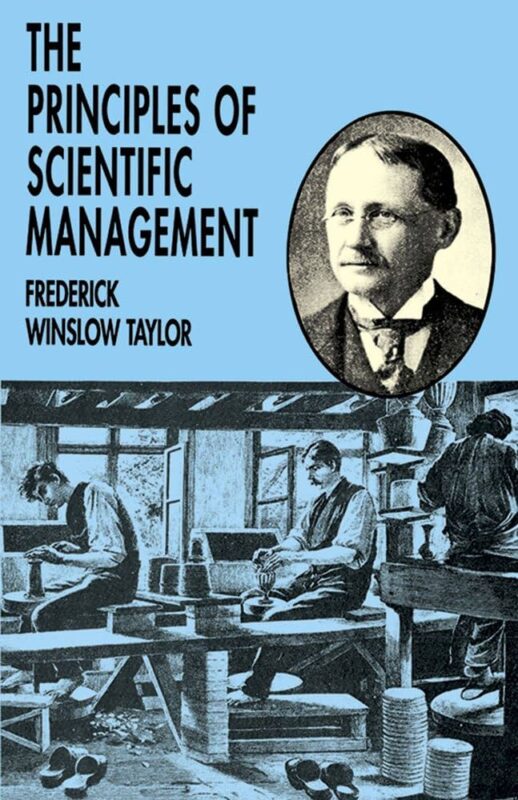
Frederick Winslow Taylor introduces The Principles of Scientific Management as a treatise that grounds modern industrial efficiency in a set of rigorously defined principles. Taylor presents a vision for the systematic organization of work, arguing that prosperity for both employer and employee arises from the scientific analysis and structuring of tasks. National efficiency, Taylor claims, emerges from the productive energies of organized labor and thoughtful management. When the United States faced questions of resource conservation and national development, Taylor saw the deeper challenge in optimizing human effort. What drives prosperity? What transforms inefficiency into growth? Taylor asserts that the answer lies in the conscious replacement of rule-of-thumb practices with science-backed systems.
Defining Maximum Prosperity and National Efficiency
Taylor conceptualizes “maximum prosperity” as a symbiotic elevation of the business and its workers. For employers, this means sustainable profits and the enduring development of the enterprise. For workers, it means higher wages, continuous training, and opportunities to rise to their natural abilities. Taylor refuses to view the interests of capital and labor as antagonistic. Instead, he demonstrates that when labor increases its output through improved methods, the market expands, employment opportunities multiply, and both profits and wages rise. He draws attention to prevailing “soldiering”—deliberate underworking—motivated by fears that increased productivity leads to unemployment. Taylor dismantles this misconception with historical evidence. When productivity climbs, the market for goods grows, demand surges, and industries flourish.
The Challenge of Soldiering and Its Structural Roots
Taylor identifies “soldiering” as a structural affliction in industrial society. Workers slow their pace intentionally, convinced that a higher output will jeopardize jobs. Taylor traces this problem to three causes. First, a widespread belief persists that increasing individual output eliminates jobs. Second, management methods typically lack the capacity to incentivize higher output safely. Third, traditional rule-of-thumb practices yield inefficiency, inconsistency, and a lack of standardization. Taylor investigates these dynamics, observing the social and psychological pressures that enforce conformity to the lowest acceptable pace. The group polices itself, reinforcing patterns of low productivity through informal codes and peer pressure. Taylor describes how such dynamics inhibit any individual from breaking the established pace, regardless of his own capacity or ambition.
Scientific Management: Principles and Methodology
Taylor positions scientific management as a discipline rooted in empirical study, detailed measurement, and standardization. He insists that for every task, a “one best way” exists, discoverable through motion and time studies. Scientific management replaces experience-based intuition with objective data, leading to codified methods that yield predictable results. Managers under this system take on the burden of planning, analyzing, and standardizing work. They do not simply issue orders; they investigate, record, and improve the methods by which tasks are performed. Taylor’s methodology requires selecting workers whose physical and mental aptitudes align with their roles, training them systematically, and continuously improving their skillset to match the evolving requirements of the work.
Cooperation and Division of Responsibility
Taylor advocates a close, daily partnership between management and labor. This relationship does not rely on coercion, distance, or mere oversight. Management assumes new and heavier responsibilities, including task planning, scientific study, and the systematic training of workers. The work is divided so that managers handle what suits their capacities—planning, analysis, and oversight—while workers focus on execution. For each job, Taylor prescribes detailed, written instructions for the worker, specifying what to do, how to do it, and the time required. Managers monitor execution, offer feedback, and reward workers for meeting or exceeding targets. Taylor observes that this cooperation eradicates suspicion, antagonism, and inefficiency. The management and the worker become partners in a joint enterprise.
The Role of Scientific Selection and Training
Taylor’s approach rejects arbitrary assignment. He insists on the scientific selection of workers, matching natural aptitude and acquired skill to the requirements of specific tasks. Workers undergo systematic training, directed by management, to ensure that their technique conforms to the scientifically derived best practices. Taylor’s studies reveal that a worker who excels in one type of task may not succeed in another. By allocating each worker to the role that matches his capabilities, management maximizes output and guarantees that training resources yield the highest possible return. Through training, the organization builds competence at scale, compounding the effects of efficiency across departments and functions.
Planning, Standardization, and Task Setting
Taylor revolutionizes the daily organization of work by mandating that management plan tasks in advance. Planning includes the scientific determination of task duration, method, and required tools. Management sets clear targets for workers, communicates the standards, and provides both guidance and monitoring. By defining the expected outcome and the steps to reach it, management creates a framework for continuous improvement. Taylor cites the case of pig-iron handlers at Bethlehem Steel: through scientific planning and selection, output rises from 12.5 to 47 tons per worker per day, while wages climb by 60%. Such gains, Taylor shows, are reproducible wherever the principles are applied.
Application Beyond Manufacturing
Taylor insists that the principles of scientific management apply beyond factories and steel mills. He sees opportunities for their deployment in agriculture, retail, education, public administration, and even home management. The essence of scientific management—a reliance on data, systematic analysis, and continuous training—benefits any organization that seeks to optimize its operations and enhance the welfare of its people. By expanding the scope of his recommendations, Taylor situates scientific management as a universal doctrine for social and economic development.
Economic and Social Impacts of Scientific Management
Scientific management produces tangible economic benefits. Companies adopting these principles see dividends rise and enjoy a stable, productive workforce. Workers earn higher wages, gain job security, and develop their skills. Taylor emphasizes that the broader adoption of scientific management enhances national productivity, raises living standards, and promotes industrial harmony. He asserts that systematic cooperation between management and workers leads to fewer strikes, greater job satisfaction, and a deeper sense of shared purpose. As organizations optimize their internal processes, markets grow, consumption increases, and national prosperity advances. Taylor links individual development and social advancement in a chain of causality rooted in scientific organization.
Case Study: Bethlehem Steel and Task Work
Taylor recounts the transformation of pig-iron handling at Bethlehem Steel as a case in scientific management. Prior to intervention, workers averaged 12.5 tons per day. Taylor’s team identified, through study and selection, the qualities required for high performance. They found Schmidt, a laborer capable of sustaining a pace that achieved the scientific ideal. Management provided Schmidt with specific instructions, closely supervised his work, and increased his wage from $1.15 to $1.85 per day. Schmidt and his successors flourished under this system, consistently meeting and exceeding the planned targets. This model demonstrates the potential of scientific management to unlock productivity gains, raise earnings, and eliminate antagonism.
Management’s Evolving Role
Taylor elevates the responsibilities of management. No longer merely supervisory, managers must become scientists, teachers, and organizers. They undertake the study of work processes, design and document the most efficient methods, and transmit this knowledge to workers. Managers take on the challenge of integrating the capacities of their workforce, identifying the right person for the right task, and ensuring that work progresses according to the scientific plan. This evolution requires investment in training, recordkeeping, and planning infrastructure. Taylor’s vision calls for management to act as the central nervous system of the organization, coordinating and optimizing activity at every level.
Worker Development and Industrial Harmony
Workers under scientific management experience both material and developmental gains. Taylor’s system rewards increased output with higher wages, creating a strong incentive for cooperation. As workers receive training and guidance, their skills and self-confidence grow. Taylor reports that, contrary to common fears, higher productivity does not exhaust workers or degrade their conditions. Instead, it produces sustainable, healthful work that supports long-term employment. The new partnership between management and labor fosters mutual respect, reduces conflict, and promotes a culture of continuous improvement. Workers recognize management’s efforts to elevate their status and respond with initiative, loyalty, and diligence.
Scientific Management in the Broader Social Context
Taylor anticipates the spread of scientific management across industrial societies. He predicts that organizations and nations that adopt these principles will outpace their competitors in both prosperity and stability. Taylor frames scientific management as both a response to and a driver of the evolving demands of modern economies. In an era marked by rapid technological change, growing populations, and intensifying global competition, he posits scientific management as the key to unlocking latent productive capacity. He calls on engineers, managers, and policymakers to embrace the systematic training of leaders and the methodical organization of work as the surest path to economic and social progress.
Enduring Influence and Contemporary Relevance
The core principles articulated by Taylor—systematic study of work, scientific selection and training, intimate cooperation, and equal division of responsibility—continue to underpin modern management theory. Organizations worldwide have integrated task analysis, workflow standardization, and performance-based incentives into their operations. Contemporary management thinkers draw on Taylor’s legacy to design systems that balance efficiency, worker welfare, and organizational growth. Taylor’s ideas influence supply chain management, lean manufacturing, and business process reengineering. His call for evidence-based practice and relentless optimization resonates with leaders seeking to adapt to shifting markets and evolving technologies.
From the roots of twentieth-century industry to the digital enterprises of today, the vision Frederick Winslow Taylor casts in The Principles of Scientific Management shapes how organizations understand work, leadership, and human potential. He identifies the structural levers of productivity, codifies a method for their systematic activation, and presents a doctrine of mutual prosperity. Scientific management remains a foundational text for business leaders, policymakers, and scholars exploring the dynamics of efficiency, cooperation, and organizational excellence. Taylor’s legacy endures in the structure of modern work, the aspirations of those who shape it, and the continuing search for prosperity through purposeful organization.