The Great Awakening vs the Great Reset
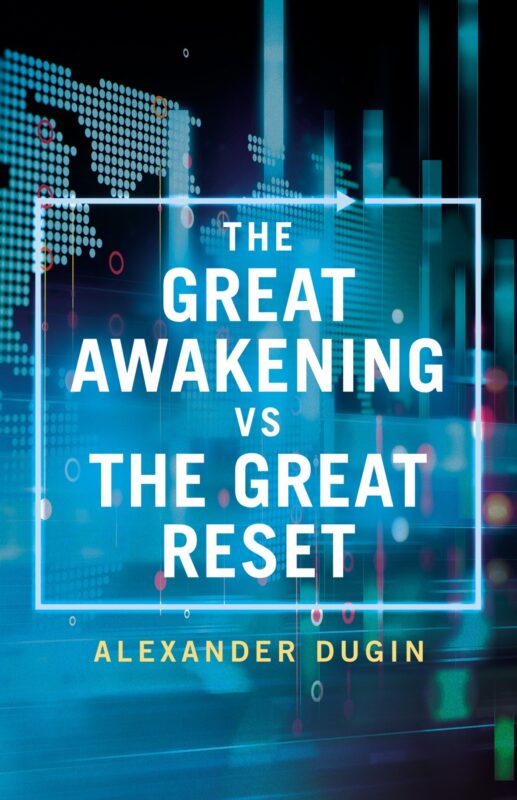
Great Awakening Vs the Great Reset by Alexander Dugin examines the global struggle between two transformative forces, one directed by globalist elites pursuing the Great Reset and the other represented by a mass populist reaction known as the Great Awakening. Dugin situates these opposing currents within a broad historical, philosophical, and civilizational context, tracking the roots and ambitions of each.
The Birth of the Great Reset: Elite Plans for Humanity
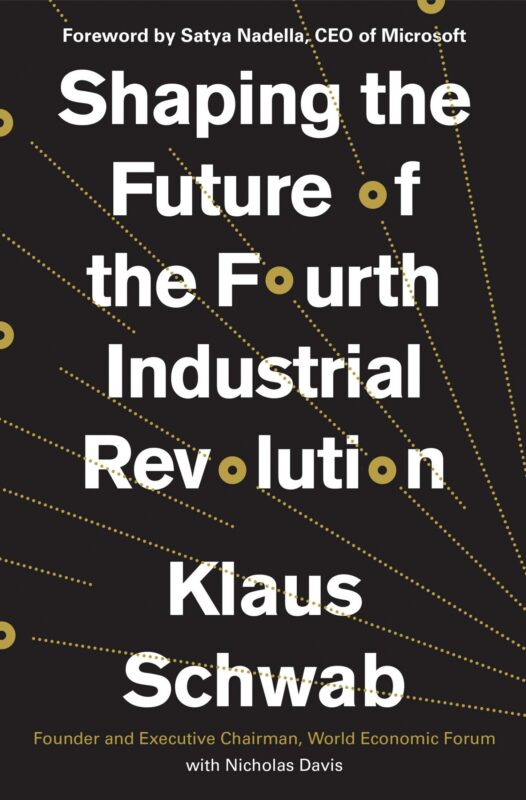
In 2020, Klaus Schwab of the World Economic Forum and Charles, Prince of Wales, announced a new vision for the future: the Great Reset. They issued a five-point program, charging humanity to embrace sweeping changes, reorient economies toward sustainability, redesign systems to advance net-zero transitions, invigorate science and technology, and rebalance investment toward green infrastructure. The term “sustainable” signals more than ecological concern—it encodes a worldview rooted in the theory of the “limits of growth,” calling for structural interventions in population, economy, and society. The Covid-19 pandemic served as catalyst, providing the rationale for extraordinary policy shifts and the concentration of power. As leaders convened, corporations mobilized, and technologies aligned, the project accelerated into all areas of life.
Mechanisms of Power: Control and Surveillance
Central to the Great Reset is control over public consciousness. Through what Dugin calls “cancel culture,” elites exercise censorship across digital networks. The restructuring of economies toward “green” priorities converges with a vision of technological transformation, including artificial intelligence and automation. These mechanisms reinforce centralization, further marginalizing traditional institutions and local forms of self-determination. The stated pursuit of “building back better” rests on a readiness to remake societies after crises, using them as opportunities for permanent structural change. Censorship, information control, and surveillance form the operational backbone of the Reset.
The Ideological Genealogy of Liberalism
Dugin traces the ideological roots of the Great Reset to medieval nominalism—a philosophy that privileges individual entities over collective forms. This intellectual lineage runs through Protestantism’s focus on personal faith, the bourgeois revolutions that dissolved traditional estates, and the consolidation of nation-states after the Thirty Years’ War. With the rise of capitalism, thinkers such as Hobbes, Locke, Hume, and Smith codified the belief in individual autonomy, private property, and market society. The modern West, Dugin asserts, constructed its identity on the continuous liberation of the individual from all forms of collective identity: church, class, gender, and finally, humanity itself.
Globalization and the Second Phase of Liberalism
In the twentieth century, liberalism confronted powerful adversaries. Socialists and communists advanced collective identities rooted in class; nationalists invoked the unifying force of the nation or race. Liberal theorists responded by denouncing both as “enemies of the open society.” The defeat of fascism and communism by Western powers marked the triumph of the liberal project. This era witnessed the articulation of the “end of history” by Francis Fukuyama and the rise of a global capitalist order, secured by a transnational elite and international institutions.
Posthumanism: The Third Phase
Once external ideological opposition collapsed, liberalism advanced into a new phase. Dugin identifies this moment as the dawn of posthumanism. The destruction of gender as a fixed category, the institutionalization of fluid identities, and the emergence of transhumanist dreams set the stage for the next transformation. The logic of nominalism, having dissolved religious, social, and gendered collectivities, now targets humanity itself. Posthumanist ideologues envision the replacement of human beings with AI, cyborgs, and genetically engineered entities. This transition, marketed as progress, envisions the end of human nature and the birth of the dividuum—a being divisible and modifiable, stripped of inherited structure and essence.
Geopolitical Context: The Great Reset in Action
The political shifts accompanying the Great Reset manifest most vividly in the United States. Dugin details how, after the setbacks faced by globalists during the Trump presidency and the rise of multipolar actors such as Russia, China, and Islamic nations, elites rallied behind the Biden administration to restore and expand the globalist agenda. Biden’s foreign policy emphasizes global over national interests, reinforcement of supranational institutions, and confrontation with states resisting globalist designs—Russia, China, Iran, and others. The deployment of military force, the expansion of NATO, and the promotion of “democratic change” signal a renewed push for liberal hegemony.
The Schism in the United States: Trumpism and Populist Resistance
Trump’s election in 2016 crystallized a fundamental division within American society. The populist base, derided as “deplorables,” mobilized against the cultural and economic disruptions wrought by globalization, migration, and gender politics. Trumpism, though lacking a fully developed ideological program, consolidated opposition to the rapid transformations promoted by the elites. Dugin situates this movement as the vanguard of the Great Awakening—a spontaneous, mass-level revolt against the final phase of liberalism.
The Structure of the Great Awakening
The Great Awakening does not rest on a single doctrine or leadership. It begins as a diffuse, intuitive reaction by ordinary people who sense an existential threat to their way of life. Its energy arises from spontaneous resistance, not organized program. It manifests in diverse contexts: in the US, as the anti-globalist populism that rallied around Trump; in Europe, as populist movements rejecting both neoliberal economics and technocratic governance; in Islamic societies, as a defense of traditional religion and cultural integrity; in China and Russia, as the assertion of civilizational sovereignty and the rejection of Western intervention.
Multipolarity and the Internationale of Nations
Dugin proposes a new strategic alignment: the Internationale of Nations. Multipolarity—an order anchored in diverse civilizations, each asserting its own cultural and political form—emerges as the necessary counterweight to the unipolar ambitions of globalist elites. The Great Awakening’s potential rests in the ability of peoples and societies, from American populists to European dissenters, from Chinese and Russian civilizational projects to the collective resistance of the Islamic world, to recognize a shared interest in resisting homogenization.
Russia’s Role: Historical Mission and Civilizational Identity
Dugin places Russia at the center of this resistance. He interprets Russian history as a long-standing refusal of nominalist, individualist, and liberal values. Russian identity prioritizes collective forms: clan, nation, church, and empire. Even the Bolshevik experiment, for Dugin, represented a collective identity in opposition to bourgeois individualism. After the post-Soviet encounter with liberal reforms, Russian society rediscovered the alienness of globalist ideology, rallying instead around conservative, sovereign values. Dugin calls for an “imperial renaissance,” restoring Russia’s mission as the katechon—the restrainer of chaos and disorder at the edge of history.
The Dynamics of Populism in Europe
European populist movements, fragmented by the legacy of left-right divisions, express growing discontent with the effects of liberal governance. Dugin identifies the necessity of transcending these historical divides. Only an integral populism—one that combines demands for social justice with the preservation of cultural identity—can generate sufficient momentum to form a pole of resistance. As populist parties and movements find common cause, the groundwork forms for a European component of the Great Awakening.
China and the Sovereignty of Civilization
China advances as a strategic actor within Dugin’s framework. Its leaders selectively adopt globalist economic tools while fortifying civilizational sovereignty. Xi Jinping’s policies, balancing tactical compromises with steadfast maintenance of Chinese identity and authority, exemplify the pragmatism of civilizational resistance. The absence of individualist traditions and the triumph of collective forms provide structural resilience to Chinese society as it navigates global pressures.
Islamic Civilization’s Stand
In the Islamic world, resistance to liberalism and globalism flows from both religious imperatives and pragmatic politics. Islamic societies find in the Great Awakening an ideological framework for coordinated resistance, transcending sectarian and regional divisions. Turkey, Iran, Pakistan, Egypt, and others pursue distinct paths, but share a foundational opposition to the core values of the Great Reset. The persistence of cultural and religious norms secures a base for mobilization.
Technology, Control, and the Role of Big Tech
Big Tech corporations enforce the ideological and operational objectives of the Great Reset. The digitalization of life, mass data collection, and algorithmic governance amplify the power of central actors to monitor, discipline, and exclude dissenting voices. Surveillance merges with information control, and the infrastructure of social networks aligns with elite directives. The capacity of ordinary people to mobilize and resist faces constant technological and legal barriers.
The Stakes of the Struggle: Humanity at a Crossroads
The Great Reset pursues a radical vision: the abolition of traditional structures and the remaking of humanity in the image of technological, managerial elites. The convergence of surveillance, genetic engineering, AI, and the abolition of boundaries signals an unprecedented transformation. The Great Awakening emerges as a last stand for human identity, autonomy, and the continuity of civilizational forms. The success or failure of this revolt, Dugin contends, will determine the fate of humanity.
The Convergence of Resistance
As the poles of resistance gather strength, the momentum of globalist transformation encounters mounting obstacles. Trumpism in America, populism in Europe, the civilizational projects of China and Russia, and the mobilization of the Islamic world create a network of actors with overlapping interests and capacities. These actors do not operate from a single ideological script but respond to convergent pressures and threats. The possibility of alliance—pragmatic, strategic, and rooted in civilizational difference—arises as a pattern, shaping the next phase of world politics.
A Call for Consciousness and Action
Dugin frames the Great Awakening as an urgent summons to awareness and agency. He calls on peoples and cultures to recognize the mechanisms of manipulation and control, to reclaim historical purpose, and to act in defense of identity and freedom. The internationalization of elite power demands a corresponding internationalization of popular resistance. Only through the mobilization of a diverse and self-aware front can the transformative ambitions of the Great Reset meet effective opposition.
Toward a New Epoch
The outcome of the struggle between the Great Reset and the Great Awakening remains open. Dugin asserts the reality of the confrontation, rooting it in the structure of world history and the material conditions of global politics. He views the present as a decisive juncture, where the continuation of liberal progress culminates in the possible abolition of humanity itself, and where the assertion of multipolarity and civilizational diversity offers the prospect of a renewed epoch. The stakes are ultimate: the preservation or transformation of the human species, the survival of cultures, and the architecture of future societies.