Hate Inc.: Why Today’s Media Makes Us Despise One Another
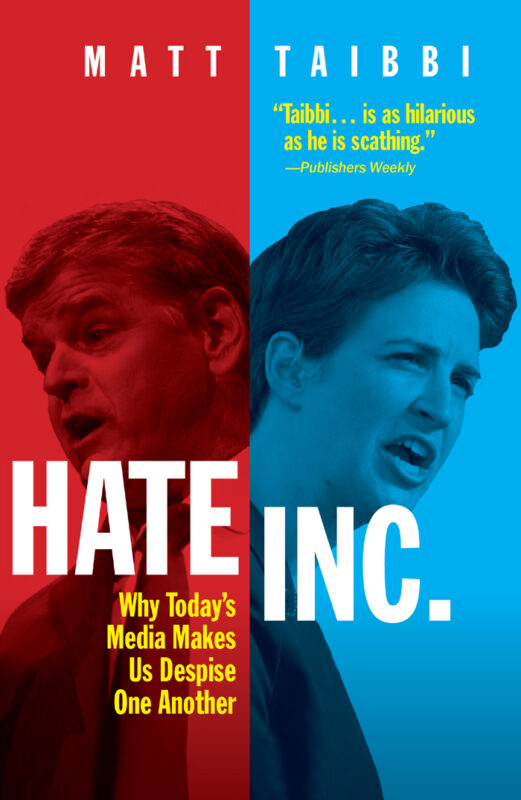
Hate Inc. Why Today's Media Makes Us Despise One Another by Matt Taibbi presents a penetrating account of the modern American media ecosystem, demonstrating how commercial imperatives have reshaped journalism into a driver of division, outrage, and tribal conflict. Matt Taibbi draws on three decades of reporting, combining industry analysis, historical context, and personal confession to illuminate the forces that transformed news from a source of public service into an engine of manufactured hate.
The Rise of Outrage-Driven Media
Taibbi roots his argument in the financial and structural incentives that underpin today’s media. Major networks and newspapers operate within a business model that rewards audience retention, engagement, and emotional response. Sensationalism—deliberately targeting the audience’s outrage centers—has shifted from occasional tactic to guiding principle. Taibbi relates his own experience, hired repeatedly for essays that incited strong, polarized reactions, to reveal a professional landscape in which “takedown artists” flourish so long as they direct vitriol at the right targets.
From Objectivity to Siloed Audiences
Decades ago, news organizations positioned themselves as neutral brokers of information, deploying third-person, affectless reporting to reach the widest possible audience. This approach secured mass market dominance but depended on a consensus vision of the American public. The collapse of this approach followed the emergence of politically branded media products. Taibbi describes how outlets like Fox News, under Rupert Murdoch’s direction, pioneered the practice of selling perspective and identity over fact. Competing networks, compelled to secure their own loyal demographics, mirrored the tactic. News consumption evolved into an exercise in group identification and affirmation rather than a process of seeking information.
The Transformation of News into Sports and Spectacle
The book details how media companies recast news in the mold of professional wrestling and reality television. News is no longer a record of events or a space for civic learning; it becomes a serialized drama of heroes and villains. Reporters, anchors, and even politicians adopt the roles of “heels” and “faces,” performing for audiences who arrive already primed for loyalty and outrage. Taibbi explains the logic behind “safe space” programming: networks cultivate viewer identity by offering content designed to comfort, provoke, or validate their core audience. The news cycle turns on manufactured conflict, creating an addictive experience built on tribal rivalry.
The Propaganda Model: Historical Foundations and Modern Application
Building on Edward Herman and Noam Chomsky’s Manufacturing Consent, Taibbi examines the covert mechanisms that shape and constrain public debate. The “propaganda model” describes how informal pressures—corporate funding, editorial gatekeeping, organized flak—enforce boundaries on what stories appear and how dissenting voices are treated. Taibbi tracks how this system operates not through direct censorship, but through exclusion and advancement: ambitious, obedient reporters rise, while skeptics and prodders find themselves marginalized. This produces a homogenized media culture, where argument and debate occur only within pre-set parameters.
Digital Revolution and the Acceleration of Division
The proliferation of cable television, followed by the rise of the internet and social media, fundamentally altered the structure of news delivery. Outlets now possess granular insight into audience preferences, enabling content algorithms to feed users only what provokes maximum engagement. The old unity of a shared news experience fragments. Each demographic receives tailored content—often stories designed to provoke anger or confirm bias—locking users into narrow information corridors. Taibbi argues that this trend toward algorithmic curation deepens group divisions, as consumers become habituated to information that flatters their identity and demonizes opponents.
Addiction to Anger: The Emotional Logic of News
Media companies engineer the news to maximize emotional impact. News is no longer a periodic briefing; it functions as a perpetual feed, designed to keep users returning in search of the next outrage or affirmation. Taibbi characterizes this process as an “addiction” to anger, where the act of consuming news mimics the compulsions of gambling or substance abuse. The content itself is secondary to the ritual of daily outrage, which becomes both product and currency within the media economy.
The Suppression of Complexity and Real Issues
The obsession with manufactured conflict and narrative clarity strips away the complexity of real-world issues. Coverage of war, corruption, and systemic failures gets sidelined by focus on “worthy” and “unworthy” victims, faux controversies, and the performance of dissent. Taibbi exposes how essential debates—such as those around military intervention, economic inequality, or government corruption—lose ground to spectacle. Editorial decisions privilege stories that spark immediate emotional responses over those requiring reflection or systemic critique.
Confessional Insight: The Journalist as Participant
Taibbi does not position himself as a dispassionate observer. He confesses to the pressures and incentives that led him to produce content designed to rile or amuse audiences rather than inform. The demand for “takedown” journalism, he asserts, produces a professional class skilled in the art of partisan demolition but unprepared for genuine investigative rigor or critical self-examination. This confession illustrates a wider industry problem: journalists recognize the system’s dysfunction but struggle to extricate themselves from its demands.
Media as Political Actor and Commercial Machine
The interplay between commercial success and political partisanship creates a symbiotic relationship between media companies and political actors. Politicians learn to play to media spectacle, adopting attention-grabbing stances and language that ensure coverage. Meanwhile, media organizations thrive on the spectacle of conflict, drawing profit from the outrage and anxiety generated by divisive narratives. The 2016 presidential election exemplifies this pattern: media coverage centered on personality, spectacle, and conflict, overshadowing substantive analysis or policy evaluation.
Consequences for Democracy and Public Trust
As media credibility declines, the public grows more cynical and less informed. Polls register widespread distrust of traditional news sources. Audiences perceive the press not as a civic institution but as a participant in political and cultural battles. Taibbi warns that the decline of trust impairs the function of democracy, which depends on an informed citizenry capable of reasoned deliberation. The fragmentation of news consumption, coupled with the rise of outrage-based programming, leaves the population vulnerable to manipulation, ignorance, and the suppression of meaningful dissent.
Reclaiming the Audience: Calls to Critical Awareness
Hate Inc. closes with an argument for critical consciousness. Readers must recognize the ways in which media companies shape perception, emotion, and thought. By understanding that news is a product tailored for demographic silos and that emotional manipulation drives the business, individuals can resist the cycle of outrage and division. Taibbi insists on the possibility of civic renewal through skepticism, self-awareness, and engagement with information outside pre-ordained channels.
A Blueprint for Media Literacy and Civic Engagement
Matt Taibbi’s analysis converges on a set of actionable principles for media literacy. Seek sources outside comfort zones, examine the motives behind news coverage, and identify patterns of emotional manipulation. Taibbi’s call to action emphasizes the value of nuance, the importance of skepticism toward easy narratives, and the civic necessity of understanding how the media economy operates. This blueprint supports not only individual sanity but also the larger project of restoring functional democracy.
The Stakes of Manufactured Division
The logic of Hate Inc. carries urgent implications for society’s future. As the machinery of outrage and division intensifies, structural polarization deepens, and the capacity for collective action weakens. Real power, Taibbi argues, benefits from a divided, distracted public. The book insists on the responsibility of citizens to reclaim their relationship to news, demanding accuracy, humility, and a return to reporting as a public good rather than a vehicle for manufactured conflict.
Conclusion: Toward a New Model of Journalism
Hate Inc. Why Today's Media Makes Us Despise One Another defines the challenge facing journalism in the digital age. The commercial model that produces outrage, addiction, and tribal rivalry corrodes democracy and impoverishes civic life. Taibbi’s insider perspective and analytical clarity sharpen the argument: a new model—one that prizes complexity, honesty, and civic responsibility—must emerge from the ruins of commercialized, polarized media. Only through awareness, skepticism, and the deliberate pursuit of information beyond one’s silo can citizens overcome the engineered animosities of modern news and build a healthier democratic culture.