The Lone Gladio
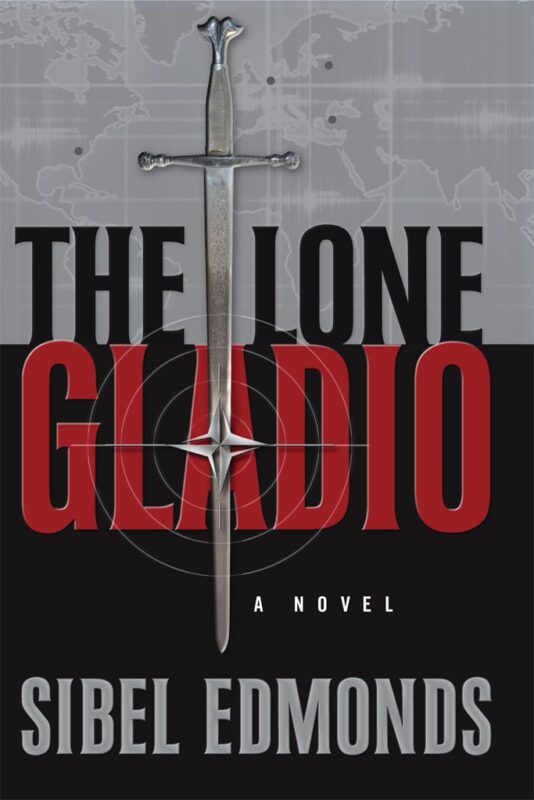
The Lone Gladio by Sibel Edmonds rips open the clandestine world of covert operations, political assassinations, and shadow wars, positioning intelligence operatives at the crossroads of global intrigue and personal sacrifice. Edmonds leverages her firsthand experience and deep knowledge of intelligence culture to craft a narrative that thrusts readers into the maze of state-sponsored terror, media manipulation, and the relentless machinery of espionage.
The Machinery of Covert Power
Intelligence agencies engineer global events. Operatives change identities, locations, and allegiances with surgical precision. Agency code names—OG 68, OG 136, and others—become living masks, not identities. Each action serves an elaborate, predatory hierarchy. Internal rivalries and shifting objectives dictate who lives and who vanishes. Operatives execute missions in Azerbaijan, Cyprus, Russia, and Southeast Asia, following orders from handlers who orchestrate false-flag terror attacks, financial black operations, and strategic assassinations. Sibel Edmonds structures these operations with rigorous detail, exposing logistics, recruitment, and psychological manipulation.
Characters as Instruments of Policy
Gregory McPhearson, known by many aliases and skillsets, personifies the consummate field operative. He shifts from “Luke Garrison” to “Michael Chase” to “Andrei Volkov,” leveraging false passports, new fingerprints, and contact lenses to blur the line between hunter and hunted. He executes missions that seed chaos and redirect blame. Greg’s emotional detachment, ritualistic routines, and methodical self-control reflect the discipline demanded by high-stakes intelligence work. When superiors change mission parameters at the last minute, Greg adapts—targeting civilians, reconfiguring psychological preps, and reorienting the entire operational arc to fit shifting geopolitical objectives. He recognizes the expendability at the heart of the system.
The book’s narrative tightens around Jason Sullivan, a U.S. State Department official stationed in Northern Cyprus. Jason’s partnership with Nuray, an investigative Turkish journalist, reveals the perilous terrain between officialdom and whistleblowing. As they pursue evidence of money laundering, political corruption, and state-sanctioned terror financing, Jason and Nuray navigate webs of deception. Risk multiplies with every discovery—banks, generals, casino owners, and diplomats tie into illicit flows that serve higher strategic goals. Edmonds grounds their investigation in granular details, showing how trust, fear, and calculation govern every step.
Recruitment, Radicalization, and Human Cost
Intelligence operations depend on the recruitment of the vulnerable. The Company identifies, exploits, and weaponizes grief, poverty, and hope. In one sequence, a Chechen widow becomes a “carrier” for a staged terror attack. Agency facilitators manipulate her through religious doctrine, financial inducements, and psychological coercion. They promise medical treatment for her child, access to community funds, and spiritual validation, layering manipulation to ensure compliance. The Imam, a charismatic agent trained by Western agencies, delivers doctrine that fuses personal loss with strategic violence. Edmonds depicts this process as methodical—each step calibrated for maximal deniability and operational effect.
Lou Brian’s investigation in Cambodia traces the apex of institutional corruption: powerful U.S. politicians shielded by diplomatic immunity exploit children, secure in the knowledge that intelligence operatives will erase all evidence. Lou plants surveillance devices, gathers damning footage, and finds himself pursued by the very agencies he sought to expose. The cover-up moves faster than the leak; surveillance professionals, fixers, and local intermediaries converge to protect their political masters. The system’s efficiency lies in its ability to erase, discredit, or destroy all threats, internal or external.
False-Flag Terror, Information Warfare, and the Logic of Sacrifice
Operations escalate through precision and ruthlessness. When planners designate a Russian daycare as a primary target, the logic sharpens: the slaughter of children is engineered to provoke outrage, justify mass retaliation, and trigger cycles of violence. Operatives at ground level modify drugs and psychological techniques to ensure that human “carriers” never realize the true nature of their targets. Sibel Edmonds anatomizes these calculations—how planners determine that certain acts, no matter how monstrous, will produce desired strategic outcomes. Media professionals inside the intelligence system prepare post-attack narratives, crafting shock and outrage that deflect attention from true perpetrators.
The Company thrives on engineered confusion. Handlers initiate, manipulate, and then abandon factions within proxy conflicts. Chechen fighters serve as scapegoats and pawns, with one faction blamed and destroyed while another is preserved for future use. Operations in Turkey, Azerbaijan, Russia, and elsewhere all exhibit the same pattern: divide, use, sacrifice, and replace. The cost is measured in broken lives, manufactured wars, and a relentless cycle of recruitment and disposal.
Corruption, Money Laundering, and Geopolitical Games
Financial flows undergird every operation. Edmonds exposes how international banks, casino moguls, and political elites convert government bonds into laundered cash, which then funds arms deals, covert actions, and terror networks. The system depends on corrupt officials in multiple countries, whose loyalty is secured through blackmail, bribery, and shared stakes in violence. The “King of Casinos” emerges as a symbol of convergence—criminal capital and intelligence operations fuse in private deals shielded from scrutiny by diplomatic immunity and media control.
Investigators like Jason and Nuray operate on shifting ground. As they pursue hard evidence, they confront institutional lethargy and sabotage. Nuray’s source within the banking scheme stands as one of only five with direct knowledge, acutely aware of the personal risk involved. Turkish generals, Russian fixers, and Western intelligence officers inhabit the same transactional universe. Each step closer to the truth increases the probability of betrayal, elimination, or co-optation. Survival demands cunning, and the ability to discern when a friend may become an enemy.
Identity, Surveillance, and the Psychology of Control
Edmonds asserts that identity functions as both weapon and shield. Operatives adopt new personas, alter physical traits, and submit to routines that suppress doubt. Surveillance extends beyond technology; psychological manipulation ensures that field agents accept moral ambiguity as a condition of survival. Ritualized routines—exercise, self-examination, chemical hand treatments—create a sense of control within an uncontrollable system. When agents break, the system removes them with cold efficiency.
Psychological tension drives the narrative. Operatives like Greg and Lou experience moments of self-doubt, recognizing the limits of agency and the absence of meaningful autonomy. Edmonds foregrounds these internal conflicts, showing how institutional imperatives override personal codes, friendships, or even love. The machinery demands compliance; hesitation introduces risk.
Information, Media, and the Manufacture of Truth
Information operations animate the world of The Lone Gladio. Agency professionals plan media coverage, plant stories, and guide public perception before and after covert actions. The machinery anticipates counter-narratives, neutralizes whistleblowers, and ensures that evidence vanishes or is discredited. Elsie Simon, the widowed language analyst working for the FBI, enters the fray with the hope that patriotic service can counterbalance personal loss. She encounters the reality of institutional inertia, witnessing firsthand how the system buries inconvenient truths. The book contends that media narratives arise from strategic interests, not the facts on the ground.
Whistleblowers, Dissidents, and the Price of Exposure
As characters move closer to exposing criminality, the system moves to silence them. Nuray, the investigative journalist, insists on pursuing the story despite mounting risk, citing humanity and justice as motivators. Her persistence marks her as a target. Jason’s connections within the embassy offer little protection. The logic of sacrifice governs outcomes: those who threaten exposure are removed, often violently or through character assassination. The book’s structure shows how easily institutions discard inconvenient truths and those who pursue them.
Convergence and Structural Consequence
As the narrative converges, patterns emerge: intelligence agencies execute terror, cover their tracks, and then exploit the fallout to achieve larger goals. Victims include civilians, whistleblowers, operatives, and even high-level assets. The system’s efficiency derives from its adaptability and internal redundancy; failures are opportunities to refine tactics and reallocate blame. Political elites, criminal networks, and media professionals participate knowingly or through compelled complicity. The convergence of power, money, and information sets the conditions for perpetual crisis management and strategic ambiguity.
Justice, Truth, and Systemic Immunity
Sibel Edmonds refuses the solace of closure. Justice functions as a mirage within the world of The Lone Gladio. Victims rarely receive redress. Perpetrators continue operations under new identities or expanded authorities. Whistleblowers who survive do so by abandoning hope of systemic reform, embracing isolation, or disappearing entirely. The machinery of covert power persists, indifferent to the suffering it produces or the ideals it invokes. Truth exists within closed circuits, accessible only to those who operate beyond reach or abandon hope of change.
Search engine users encountering The Lone Gladio by Sibel Edmonds will find a masterfully constructed novel that exposes the machinery of covert power, charts the psychology of field agents, and reveals the convergence of criminality and statecraft. The book stands as an indictment of official narratives, urging readers to question, investigate, and recognize the patterns behind global events. Readers attuned to the pulse of contemporary geopolitics, the ambiguities of intelligence work, and the human cost of systemic violence will find in this narrative both revelation and challenge. Sibel Edmonds insists that the stakes—lives, truth, the direction of nations—remain real, enduring, and unresolved.