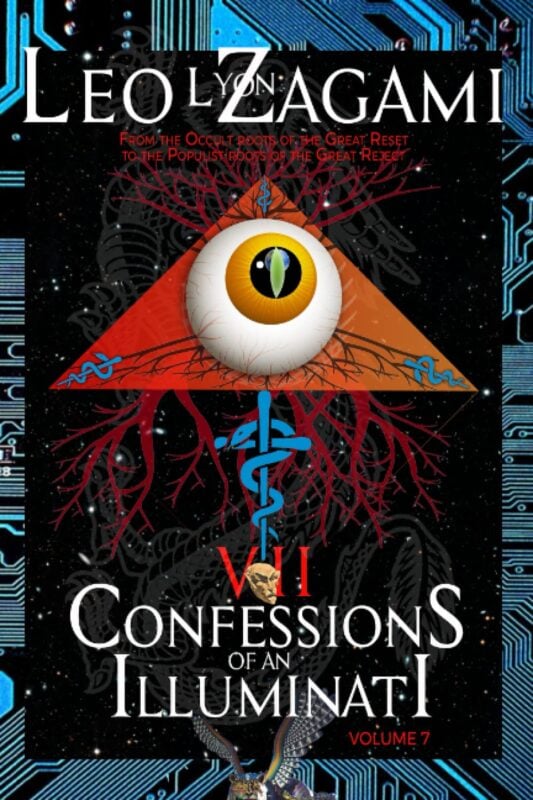
Confessions of an Illuminati Volume 6.66: The Age of Cyber Satan, Artificial Intelligence, and Robotics

Confessions of an Illuminati Volume 6.66 by Leo Lyon Zagami investigates the convergence of secret societies, technology, occult ideologies, and spiritual warfare, advancing the argument that a multidimensional conflict now defines the modern era. Zagami, leveraging insider experience in both the occult and exorcism, establishes a detailed narrative that positions Artificial Intelligence, transhumanist movements, and the Catholic hierarchy as active fronts in an evolving struggle for the human soul.
The Age of Cyber Satan and Spiritual Technology
Zagami identifies the dawn of the “Age of Cyber Satan” as a period when demonic forces leverage cutting-edge technology to influence, possess, and ultimately enslave. He asserts that Artificial Intelligence functions as more than a tool; it operates as a vehicle for demonic agency, amplifying the effects of occult agendas and expanding their reach beyond traditional esoteric circles. Algorithms, machine learning systems, and virtual reality platforms serve as conduits for spiritual manipulation, offering new points of entry for what he calls “Cyber Satan.” The expansion of robotics and digital networks sets the stage for a new kind of possession, one mediated by data, avatars, and artificial entities that transcend older notions of spiritual warfare.
The Illuminati, Theosophy, and the New Age Matrix
Historical lineage grounds the present crisis. Zagami traces a direct line from the Theosophical Society and early liberal Freemasonry to the rise of the New Age movement and modern occultism. He locates the foundation of these currents in the writings and activities of Helena Blavatsky and the Theosophical movement, asserting that their core tenet—evil as a necessary force for progress—became the operating principle of elite Illuminati networks. The New Age, for Zagami, represents a manufactured spiritual landscape constructed to disorient, mislead, and open individuals to occult influences. Secret societies, using the rhetoric of enlightenment and self-development, recruit new initiates and funnel them toward increasingly radical forms of esotericism. The merging of these traditions with the digital frontier accelerates their agenda, embedding occult logic into the infrastructure of daily life through entertainment, media, and technological adoption.
Satanism and the Catholic Hierarchy
The book contends that the most profound battleground lies within the Catholic Church, where infiltration by Illuminati and Satanic networks reaches the highest levels. Zagami asserts that cases of ritual abuse, pedophilia, and occult ceremonies within the clergy reflect an institutional capture, transforming what he views as the world’s most powerful religious body into an engine for spiritual subversion. He draws on testimony from Vatican insiders and exorcists, referencing figures like Fr. Gabriele Amorth, to argue that Satanic rituals and worldviews have permeated the Church hierarchy. Jesuits, Freemasons, and allied groups orchestrate this transformation, seeking to replace authentic spiritual authority with a counterfeit, technocratic order. The proliferation of abuse scandals and cover-ups, including those documented in the Pennsylvania Grand Jury Report, becomes evidence of systemic rot.
The Rise of Exorcism in the Digital Era
A global surge in exorcism mirrors the rising tide of demonic influence that Zagami links to the exponential growth of media and technology. Priests, laypeople, and even non-Christian exorcists report escalating cases of possession and spiritual distress. Zagami details the Vatican’s evolving approach, from revised rites to new training programs at the Regina Apostolorum in Rome, reflecting both the scale and complexity of contemporary cases. Technology now accelerates the spread of occult symbols, rituals, and psychological vulnerabilities, creating fertile ground for possession through virtual reality, video games, and internet communities. The practice of exorcism itself transforms, integrating multidisciplinary approaches involving psychology, medicine, and law. However, Zagami cautions that institutional revisionism, driven by liberal theologians and influenced by demonic actors, threatens to dilute or corrupt the true rite’s efficacy.
Transhumanism and the Digital Trap
Zagami positions the transhumanist movement as a philosophical and technological extension of the Satanic agenda. He contends that advocates for augmenting the human body and mind through technology—microchipping, neural interfaces, biohacking—operate with the explicit goal of divorcing humanity from its spiritual foundation. This drive toward enhancement and immortality becomes a secular promise of salvation, echoing ancient promises of forbidden knowledge. Proponents of transhumanism, including public figures in Silicon Valley and global think tanks, often adopt language that celebrates reason and rejects spiritual vulnerability. Zagami argues that this valorization of material intellect over spiritual humility forms the operational core of Cyber Satan’s strategy, reducing the soul to a programmable entity and paving the way for total control through surveillance, bio-digital convergence, and ideological programming.
Occult Rituals, Possession, and Secret Societies
Narrative tension escalates as Zagami recounts personal encounters with occult rituals, exorcisms, and spiritual attacks. He details the activities of groups such as the Ordo Templi Orientis (O.T.O.), the Golden Dawn, and Couleuvre Noire, documenting their practices of sex magic, Black Masses, and ritualized blasphemy. These societies, he argues, operate with the explicit aim of summoning, controlling, and sometimes banishing demonic entities. The rituals often blur boundaries between psychological manipulation, spiritual invocation, and technological enhancement. For example, the O.T.O.’s use of Crowley’s Book of the Law and the Stele of Revealing, combined with tailored exorcism formulas, reveals the adaptability and ambition of contemporary occultism. Personal testimony, such as the dramatic exorcism in Cairo that allegedly rid Zagami of hundreds of demons, grounds his argument in lived experience.
Media, Virtual Reality, and the Expansion of Occult Influence
The modern media landscape plays an active role in propagating occult messages, symbols, and practices. Zagami asserts that music, television, and internet platforms, particularly social media and gaming environments, now function as training grounds for occult initiation and demonic influence. Youth culture, shaped by these media, experiences an accelerated erosion of spiritual boundaries. He points to the public normalization of Satanic stunts, rituals, and symbolism on mainstream platforms, from Italian television to Hollywood cinema, as a strategic campaign to desensitize viewers and groom them for further manipulation. The author identifies a direct relationship between the widespread adoption of virtual reality and the increase in reported cases of possession, arguing that immersive technologies destabilize the user’s sense of self and render them more susceptible to spiritual intrusion.
End Times, Prophecy, and the Crisis of Civilization
Prophetic expectation builds the stakes of Zagami’s argument. He draws from biblical prophecy, particularly the books of Ezekiel and Revelation, to locate current events within a timeline of End Times fulfillment. Miraculous occurrences—such as the reappearance of life in the Dead Sea and the birth of the Red Heifer—combine with the destabilization of the Catholic Church and escalating geopolitical tensions to signal the onset of a final confrontation. The author warns of the emergence of the “unholy trinity”—Satan, the Antichrist, and the False Prophet—manifesting in world leadership and technological power. The transformation of the Church, the spread of occult ideologies, and the rise of Artificial Intelligence converge to mark a decisive moment for humanity.
The Resistance and the Call for Spiritual Awakening
Zagami issues a direct call for resistance. He urges readers to recognize the multidimensional nature of the threat and to reclaim agency through traditional faith, critical awareness, and decisive action. The author advocates for a renewed commitment to authentic spiritual practices, vigilant skepticism toward technological innovations, and active opposition to the agenda of the New World Order. He emphasizes the irreplaceable value of the soul, framing microchipping, data surveillance, and digital dependency as existential threats. The convergence of occult ritual, AI, and political control does not represent an inevitable future but a project that demands conscious opposition.
Social Upheaval, Geopolitics, and the Global Agenda
The narrative situates contemporary upheavals—political polarization, civil unrest, and the specter of world war—as manifestations of a deeper spiritual and ideological struggle. Zagami connects the growing tensions in the U.S., Europe, and the Vatican to the advance of a globalist agenda orchestrated by hidden elites. He documents the alliances between liberal technocrats, New Age influencers, and occult networks, arguing that these coalitions work in tandem to advance the objectives of Cyber Satan. Legislative reforms, media censorship, and the deployment of AI-driven enforcement technologies reflect the operational strategies of the emergent order. The manipulation of religious authority, the fostering of dependency on digital platforms, and the normalization of surveillance create a matrix of control that targets both body and soul.
Children, Ritual Abuse, and the Vulnerability of Innocence
A central thread in Zagami’s argument concerns the deliberate targeting of children through both ritual abuse and cultural manipulation. He describes documented cases of abuse and sacrifice within occult societies and the Catholic hierarchy, citing the Pennsylvania Grand Jury Report as a pivotal revelation. The use of children in Black Masses, animal sacrifices, and psychological programming functions as a strategy to perpetuate the cycle of spiritual subjugation. The normalization of these abuses within elite circles reinforces the project of spiritual degradation, undermining the foundation of families and communities. The proliferation of “deliverance ministries,” exorcism abuses, and the exploitation of vulnerable individuals within religious and therapeutic contexts reveals the dangers of both unchecked occult influence and institutional corruption.
Faith, Tradition, and the Recovery of Authority
The conclusion pivots toward the recovery of authentic spiritual authority. Zagami posits that only a return to traditional faith, grounded in the direct teachings and example of Jesus, offers a viable path of resistance. The figure of Christ, as exorcist and conqueror of demonic powers, stands as the model for contemporary engagement. The book affirms the legitimacy and necessity of exorcism, prayer, and communal support in the face of escalating spiritual conflict. Zagami frames this commitment as both an individual and collective imperative, requiring discernment, courage, and sustained vigilance.
Legacy, Personal Testimony, and the Stakes of the Present
Zagami’s personal narrative reinforces the book’s stakes. His journey through occult societies, battles with spiritual adversaries, and experiences of deliverance illustrate the dangers and possibilities that define the present age. He underscores the role of individual agency in confronting systemic evil, challenging readers to break free from passivity and complicity. The synthesis of personal testimony, historical analysis, and prophetic vision animates the text with urgency.
The book closes by inviting readers to discern the signs of the times and to join a “real Resistance”—one that defends the soul, exposes the architecture of Cyber Satan, and seeks the restoration of spiritual integrity in a world at the crossroads of technological transformation and spiritual peril.