The First Global Revolution: A Report by the Council of Rome
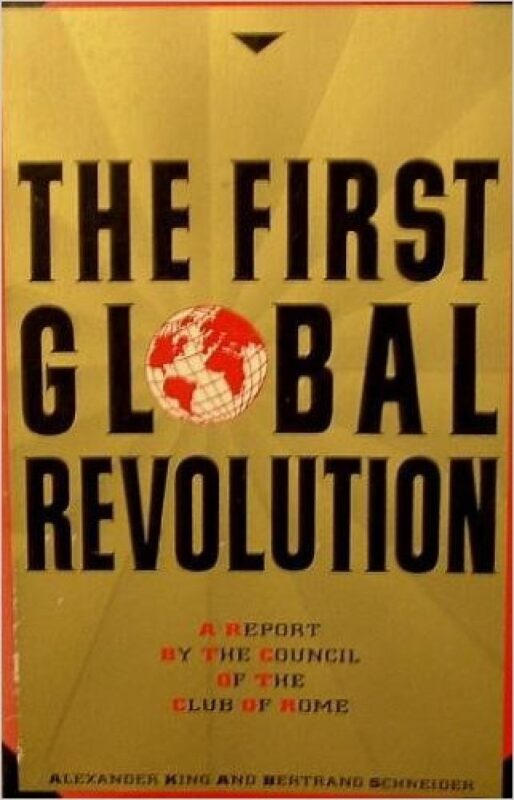
The First Global Revolution by Alexander King and Bertrand Schneider presents a sweeping analysis of the forces reshaping the world in the late 20th century. The authors frame this period as a planetary inflection point—a convergence of environmental, economic, political, and social crises demanding systemic transformation. The report emerges from the Council of the Club of Rome, an international think tank founded to anticipate and address long-term global challenges.
Emergence of the Problematique
The concept of the "problematique" anchors the report's framework. It denotes the interwoven crises facing humanity—climate instability, resource depletion, geopolitical fragmentation, and economic inequality. These forces no longer develop independently; they reinforce, compound, and accelerate one another. The authors argue that policy fragmentation and institutional inertia prevent effective response. Governments default to short-term crisis management, caught in electoral cycles and national self-interest. Strategic foresight disappears in the shadow of immediate political gain.
Environmental thresholds and irreversible harms
Industrialization has shifted from localized pollution to global destabilization. The authors trace a trajectory from visible smog and waste to invisible threats—atmospheric degradation, ozone depletion, biodiversity collapse. Chemical diffusion into aquifers, acid rain across national borders, and radioactive contamination all signal that nature no longer absorbs industrial byproducts without cost. The greenhouse effect intensifies that warning. The accumulation of greenhouse gases creates a planetary feedback loop whose consequences may include rising sea levels, agricultural disruption, and climatic extremity. These changes unfold across decades but demand decisions now.
Economic growth without direction
Growth metrics obscure deterioration. National income accounts register increased spending on disaster recovery, healthcare, and pollution control as signs of economic expansion. The authors dismantle this illusion by examining underlying structural decay—infrastructure erosion, urban blight, and declining life quality. They highlight how exponential growth models ignore saturation limits. When ecosystems and social systems hit stress thresholds, growth morphs into collapse. Political actors sustain the growth paradigm through debt expansion and financial speculation, severing growth from production or human need.
Urbanization and the fragility of megacities
Cities swell beyond planned capacity. Rural migrants seek opportunity but confront congested housing, informal employment, and failing services. The authors depict urban sprawl not as development but as fragmentation—shantytowns without sanitation, traffic without transport, infrastructure without maintenance. These megacities foster economic exclusion and political volatility. Unmet needs in dense populations incubate unrest. Where public systems falter, informal economies and private security emerge as substitutes for governance.
Disintegration of the nation-state
Sovereignty dissolves under the pressure of interdependence. Transnational corporations and global capital flows override national boundaries. Markets respond instantly across time zones, while governments negotiate treaties through sluggish bureaucracies. The authors argue that most modern states lack the scale to manage climate threats or the flexibility to address ethnic or regional autonomy demands. Sovereignty persists as legal fiction while power migrates to supranational blocs and subnational movements. In this dual movement—toward global integration and local self-determination—the traditional state erodes.
Population pressures and demographic transition
The global population explosion sharpens demand for food, water, housing, and employment. High fertility regions outpace infrastructure and education. The youth bulge in many nations produces millions entering labor markets that cannot absorb them. These structural mismatches lead to frustration, radicalization, and migratory surges. The authors identify population growth as both multiplier and driver of crisis. Where birth rates fall, societies face aging populations and shrinking workforces, demanding costly social care. Where birth rates remain high, basic services collapse under volume strain.
Technological transformation and strategic myopia
Information technologies redefine labor, communication, and power. Microelectronics, automation, and biotechnologies displace industrial-era economies. But technology alone offers no guarantees of benefit. Without ethical direction and institutional reform, the authors warn that innovation serves wealth concentration and surveillance. Long-term planning lags behind technological acceleration. Governments promote technologies for economic competitiveness without assessing ecological or social costs. The information age expands access but fragments attention, complicating coherent public discourse.
Collapse of bipolar geopolitics
The Cold War’s end did not resolve global conflict; it disorganized it. Superpower rivalries stabilized the international order through deterrence. Their dissolution released suppressed ethnic, religious, and regional tensions. The authors analyze the resurgence of nationalism, identity politics, and separatist movements as reactions to homogenizing globalization. These movements arise not from nostalgia but from unmet demands for recognition and control. Where legitimacy fails, violence follows. Without a coherent international framework, peacekeeping becomes episodic and reactive.
Disarmament and redirection of resources
Military spending drains resources from social development. The authors calculate the opportunity cost of arms budgets—investments in education, health, and infrastructure lost to defense industries. They examine how arms sales, often justified by geopolitical strategy, fuel local conflicts and empower authoritarian regimes. Disarmament, if reinvested into human development, could transform global trajectories. But without institutional mechanisms to guarantee redirection, savings vanish into budgetary absorption or new security architectures.
The failure of aid and the illusion of trickle-down
Development aid creates dependency when it replaces initiative. Loans and technical assistance often finance elite consumption or inappropriate infrastructure. The authors expose how Western technologies, transplanted without adaptation, fail in different ecological and social conditions. Large dams silt up. Factories lack maintenance. Green Revolution techniques widen rural inequality. Aid sustains regimes that prioritize military procurement over public welfare. The myth that wealth in industrial nations spreads to poorer regions dissolves under evidence of widening global inequality.
From aid to partnership
The authors propose a shift from paternalistic aid to collaborative partnership. They urge donor nations to transfer not just funds but authority. Recipient nations must co-design programs, define metrics, and retain control of implementation. Partnership means long-term commitment, mutual accountability, and shared learning. It involves listening before lending, understanding before advising. This reorientation requires humility from powerful nations and initiative from emerging ones.
Resolutique and integrated response
The "resolutique" offers a framework for strategic response. It defines a coordinated set of actions across environmental, economic, political, and cultural domains. The authors advocate for anticipatory governance—systems that act on early signals rather than post-crisis damage control. They recommend global agreements on pollution limits, tax reform to discourage waste, and institutional restructuring to match problem scale with authority. The resolutique recognizes feedback loops and systemic leverage. It rejects isolated solutions in favor of pattern recognition and aligned incentives.
Governance capacity and institutional design
Governance must move beyond command hierarchies to flexible networks. Decision-making should decentralize where context matters and centralize where scale demands. Cities, regions, and global councils must each hold appropriate roles. Transparency and participation enhance legitimacy. Authority flows from capacity, not history. The authors call for institutions built for complexity—responsive, adaptive, and ethically grounded.
Ethical renewal and motivational transformation
Lasting change requires more than policy. It demands shifts in values and priorities. The authors emphasize education, culture, and leadership as levers for ethical renewal. They call for a revaluation of consumption, a reevaluation of success, and a recommitment to stewardship. Motivation arises from vision. Without a compelling image of the future, fear dominates and cynicism spreads. The report proposes an ethic of planetary responsibility—where the dignity of persons aligns with the resilience of systems.
Youth as the crucible of change
Young people inherit converging crises. Their numbers, especially in developing regions, equip them with power. Their disillusionment or engagement shapes political futures. The authors write for youth as protagonists, not victims. They urge education systems to foster critical thinking, cooperative problem-solving, and civic imagination. The revolution requires minds that can navigate uncertainty and hearts that can endure complexity. Youth movements become seedbeds of culture shift, testing new models of solidarity and sustainability.
Historical convergence and the stakes of inaction
The authors reject fatalism. They present their warnings as calls to preventive action. The convergence of environmental stress, social fragmentation, and institutional failure creates both risk and opportunity. Without coordinated response, these crises will amplify one another. With strategic direction, they can catalyze global transformation. The future remains unwritten, but delay narrows the field of possibility. Strategic inaction becomes complicity in degradation. To govern the transition, humanity must act with speed, foresight, and solidarity.