The Mayor of Casterbridge
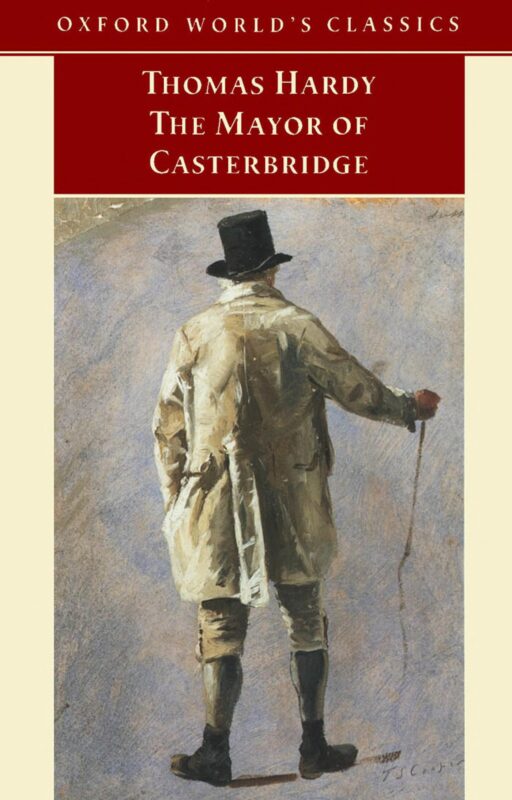
The Mayor of Casterbridge by Thomas Hardy examines the fate of Michael Henchard, whose choices and temperament catalyze a narrative of rise, loss, and irreversible consequence within the landscape of nineteenth-century rural England.
Origins and Setting: Casterbridge as Living History
Thomas Hardy grounds the narrative in the fictional town of Casterbridge, a vivid reflection of Dorchester, his childhood home. The town’s agricultural rhythm, its ancient Roman roots, and the enduring routines of rural life generate a sense of temporal layering. Within this environment, progress and tradition intersect in visible, tangible ways. Fields, harvests, fairs, and the physical geography shape the patterns of commerce and relationships. Casterbridge’s insularity inscribes the personal struggles of its inhabitants into public spectacle.
The Central Figure: Michael Henchard’s Character and Destiny
Henchard, a hay-trusser who, in an impulsive act of drunkenness, sells his wife and daughter at a country fair, commits a transgression that will structure the rest of his existence. Driven by pride, volatility, and ambition, he ascends to wealth and public standing as mayor. The town’s memory, however, accumulates. Henchard’s temperament—defined by stubborn will and passionate attachments—interacts with circumstance to produce recurrent reversals. His relationships, particularly with Elizabeth-Jane and Donald Farfrae, form the axes along which his fortunes pivot.
Narrative Structure: Fortune, Cyclicality, and the Arc of Tragedy
Hardy constructs the narrative through a wheel of fortune that moves Henchard through successive elevations and humiliations. The text integrates linear development—rising from obscurity, attaining prominence, falling into disgrace—with circular returns. Henchard’s final exit from Casterbridge echoes his first entry decades before, marked by exhaustion, alienation, and a palpable reduction in vitality. The narrative’s structure embeds temporal logic into character fate, so that past actions re-emerge as catalysts for new events, and cycles of hope and regret define the arc of experience.
Agency, Environment, and the Limits of Will
Henchard’s actions set consequences in motion, but Hardy’s design insists that the environment—social, economic, and emotional—acts reciprocally. The town’s rituals, its collective memory, and its resistance to change create friction. Weather, markets, rumor, and the very fabric of Casterbridge exert pressure on individuals. Henchard’s attempts at self-mastery, such as his vow of abstinence and his efforts at atonement, encounter constraints established by habit, history, and the needs of others.
Elizabeth-Jane: Growth, Perception, and the Path of Integration
Elizabeth-Jane, initially introduced as the daughter sold by Henchard, becomes a focal point for Hardy’s exploration of endurance and adaptability. Her curiosity, autodidactic spirit, and capacity for observation distinguish her trajectory. She learns from misfortune, integrates knowledge gained through suffering, and develops a philosophy that weighs gratitude against a measured awareness of life’s limits. Her journey—through acts of care, labor, and forgiveness—links the domestic and the public, past and future, emotion and judgment.
Donald Farfrae: Modernity, Commerce, and Social Mobility
Farfrae enters Casterbridge as a stranger bearing innovative agricultural techniques and a pragmatic, cheerful disposition. He quickly establishes himself as a commercial rival to Henchard, eventually surpassing him in social and economic standing. Farfrae’s rise is linked to adaptability, thrift, and managerial skill. His relationship with Elizabeth-Jane and Lucetta draws the vectors of competition, romance, and ambition into dynamic tension. Farfrae’s character catalyzes shifts in Casterbridge’s commercial practices, introducing change through demonstration rather than decree.
Lucetta: Desire, Reputation, and the Weight of the Past
Lucetta Templeman, once involved with Henchard, arrives in Casterbridge to claim a new life. Her aspirations, secrets, and vulnerabilities intersect with the town’s appetite for spectacle. Lucetta’s efforts to shape her own destiny—her marriage to Farfrae, her attempts at social reinvention—collide with the town’s memory and the spectacle of the skimmington ride. Her fate underscores the risks inherent in social aspiration and the power of collective judgment.
Social Order and the Mechanisms of Change
The society of Casterbridge operates through visible and invisible codes. Public rituals, fairs, the work of the market, and communal interventions in crisis construct a framework for action. Gossip, ostracism, and the regulation of reputation enforce boundaries. Yet Hardy marks moments of transformation: new technologies, shifting markets, and the influx of outsiders create points of friction and renewal. Casterbridge, though steeped in tradition, registers movement through time.
Themes of Responsibility, Atonement, and the Burden of the Past
Henchard’s efforts to seek forgiveness, repair relationships, and find meaning in love reflect a central tension in the novel. Responsibility attaches to actions with persistent weight. The past, embodied in the memory of the wife-sale and its aftermath, continually reasserts itself. The struggle to reconcile intention and outcome shapes character development. Questions arise—can atonement restore lost relationships? Does fate permit redemption? The narrative advances by observing the interplay between character intention and the unfolding sequence of events.
Narrative Technique and the Play of Perspective
Hardy employs shifts in narrative perspective, privileging at times the internal states of characters—Henchard’s anxiety, Elizabeth-Jane’s contemplations, Farfrae’s pragmatic reasoning. Scenes move fluidly between public spectacle and private reckoning. Irony, understatement, and a measured detachment allow the narrative voice to interrogate character motives and the social logic of Casterbridge. The result produces a dense interlacing of action, motivation, and judgment.
Editorial Evolution: Manuscript, Revision, and Critical Edition
The text of The Mayor of Casterbridge exists in multiple forms, shaped by Hardy’s revisions for magazine serialization, first book editions, and subsequent collected versions. Editorial interventions documented in this Oxford World’s Classics edition identify substantial changes in characterization, omitted scenes, and variant endings. Hardy’s editorial process displays an ongoing negotiation between market expectation and artistic intention. Each version produces subtle recalibrations of plot and character emphasis.
Hardy’s Philosophical Vision: Progress, Memory, and Human Value
The novel embeds a philosophy that regards change as both inevitable and ambivalent. Progress emerges as a spiral—a “looped orbit”—moving forward yet circling back to retrieve what remains valuable from the past. Characters who persist, such as Elizabeth-Jane and Abel Whittle, blend old habits with new opportunities, demonstrating that survival depends on adaptability and compassion. Hardy identifies the potential for loving-kindness to transform suffering, proposing that the integration of experience—rather than the pursuit of abstract ideals—anchors human value.
The Construction of Tragedy and the Emotional Architecture
Henchard’s trajectory meets the classical demands of tragedy: error of judgment, peripeteia (reversal), recognition, and a final act of self-knowledge. Hardy introduces a domestic and emotional register into this structure, relocating the climax from public action to private reconciliation. Henchard’s final acts, his relinquishment of Elizabeth-Jane, and his bequest that no one mourn his death, crystallize the pathos and gravity of his journey.
Gender, Power, and the Distribution of Sympathy
Elizabeth-Jane’s development situates the possibility for integration and resilience within a female character whose virtues—self-discipline, empathy, fidelity—acquire narrative weight. Hardy’s editorial revisions foreground her patience and propriety, yet early versions mark her with greater assertiveness and independence. The novel negotiates contemporary debates on gender roles, moral agency, and the visibility of women in both domestic and public spheres. Lucetta’s experiences, by contrast, chart the vulnerabilities attached to reputation and desire.
The Persistence of Place: Casterbridge as Moral Terrain
Physical locations—the King’s Arms, Mixen Lane, the corn exchange, the Roman amphitheater—structure the actions and trajectories of characters. Places carry memory, accumulate scandal, and enforce social norms. The amphitheater becomes the setting for both reunion and exposure. Mixen Lane, a site of poverty and vice, both attracts and marginalizes. Hardy invests place with agency, granting Casterbridge the status of an active participant in the unfolding drama.
Conclusion: Survival, Adaptation, and the Measure of Worth
The final movement of the novel observes the continuance of ordinary life amid the ruins of personal tragedy. Elizabeth-Jane and Farfrae, in their marriage and shared domesticity, embody the process of adaptation—holding together inherited values and emergent possibilities. The townspeople persist, accommodating novelty while sustaining habit. Hardy proposes that worth inheres in the capacity to endure, to integrate suffering and wisdom, and to extend care within the inevitable flow of time.
Through its precise rendering of character, its immersion in the particulars of place and period, and its structural intricacy, The Mayor of Casterbridge by Thomas Hardy composes a study in the dynamics of fate, choice, and social transformation. The narrative achieves resonance by allowing individual stories to illuminate the wider conditions of human change, memory, and survival. The power of Hardy’s vision rests in the convergence of action and environment, intention and effect, where the measure of a life lies in its navigation of love, loss, and the possibilities that arise from the effort to reconcile self and world.