Visas for Al Qaeda: CIA Handouts That Rocked the World: An Insider’s View
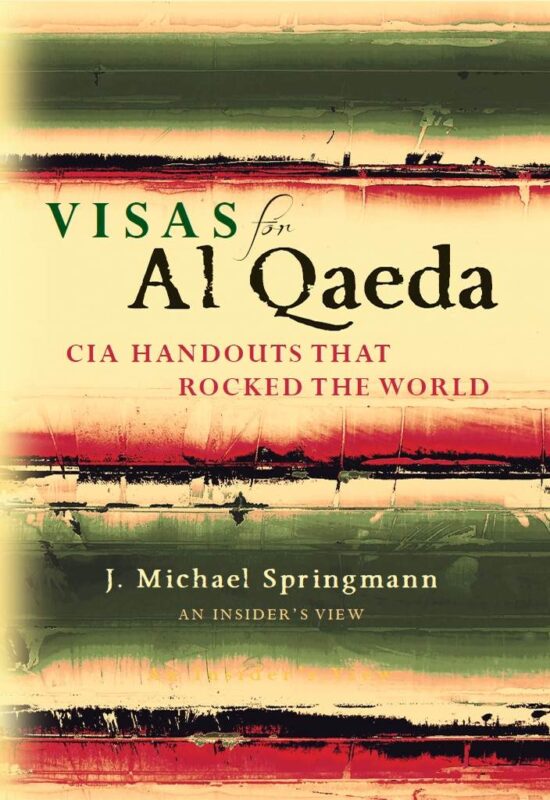
Visas for Al Qaeda - CIA Handouts that Rocked the World by J. Michael Springmann exposes a covert network within U.S. foreign policy, where the intersection of intelligence strategy and consular procedure shapes the flow of global conflict. Springmann draws from direct experience, tracing how the U.S. State Department and CIA collaborated to channel foreign fighters into pivotal conflict zones, transforming American embassies into operational nodes for a clandestine project that redrew the map of modern terrorism.
The Secret Architecture of Visa Operations
A consular window in Jeddah, Saudi Arabia, receives a constant flow of visa applicants, but beneath the bureaucracy lies an engineered pattern. Springmann identifies specific institutional behaviors: American diplomats, tasked with legal oversight, encounter persistent interference from intelligence officers. The book details how visa applications from suspicious candidates—men with scant ties to Saudi Arabia or legitimate travel purpose—move through internal channels guided by external pressures. Senior officers direct consular staff to approve cases marked by irregularities, invoking “national security” as a warrant for exception. State Department regulations and U.S. immigration law state clear conditions for entry. These rules dissolve when classified objectives intersect with official policy. The consulate becomes a gatekeeper not for lawful travelers, but for recruits who will form the core of what the author calls the Arab-Afghan Legion, later known as Al-Qaeda.
Jeddah as a Nexus: Agency, Actors, and Outcomes
The Jeddah consulate processes tens of thousands of visa applications each year. Springmann describes an environment saturated with intelligence personnel: out of approximately twenty U.S. citizens on staff, only three work for the State Department. The rest serve CIA or NSA interests. This institutional density transforms the consulate into a center for clandestine logistics. The practical outcome is the expedited movement of fighters—mujahideen—selected for training and deployment to Afghanistan, where they fight Soviet forces with American support. The author’s testimony reveals how requests for visa approvals escalate from polite suggestions to direct demands, and then to threats. When Springmann resists, his superiors intervene, authorizing visas that legal review would block. Files documenting these irregularities vanish; internal watchdog mechanisms fail by design.
From Afghanistan to Global Destabilization
The program’s scope extends beyond the Soviet-Afghan conflict. As the American-backed fighters gain experience, the U.S. government redirects them to other regions marked for destabilization. The Balkans become a new front, followed by Iraq, Libya, and Syria. Fighters travel under U.S.-issued visas, receiving training, debriefing, or logistical support in the United States before returning to battlefields abroad. Springmann identifies a recurring cycle: each theater of conflict receives foreign fighters with American sponsorship, facilitated through a covert visa program. The cumulative effect destabilizes states, generates cycles of violence, and produces enduring networks of militants who become the architects of global terrorism.
Institutional Incentives and Whistleblower Retaliation
Springmann’s account tracks the personal costs of institutional dissent. As he raises concerns about the legality and propriety of the visa program, he encounters escalating retaliation: negative performance evaluations, loss of records, isolation, and eventual dismissal from the Foreign Service. The book dissects how the bureaucracy deploys career-ending tactics to silence internal opposition. Whistleblowers face systematic exclusion, while complicit actors receive protection and advancement. The author situates his experience within a broader trend, observing a culture where legal and ethical boundaries hold meaning only in the absence of classified imperatives.
The Legal Framework: Regulation, Subversion, and Secrecy
U.S. immigration law and the State Department’s Foreign Affairs Manual articulate specific grounds for visa issuance and refusal. The consular officer’s role, as designed, upholds these standards. Springmann details how intelligence priorities rewrite this framework. Visa applicants, lacking documentation, legitimate intent, or stable residence, secure passage when linked to agency requests. The Bureau of Diplomatic Security, nominally responsible for policing such violations, remains inert or complicit. Legal enforcement exists in theory but yields to operational necessity. The result is an environment where official documents become instruments of clandestine mobility, severing the relationship between law and practice.
Media Complicity and the Silencing of Dissent
The book investigates the media’s function as a stabilizer for covert policy. Springmann notes that mainstream news outlets, including television and print, disregard or actively reinforce government narratives. Journalists who attempt to surface the story encounter editorial resistance or risk marginalization. Public awareness of the visa program remains limited, and narratives challenging official policy seldom gain traction in prominent venues. The author’s outreach—through articles, radio, and independent media—generates visibility among specialized audiences but fails to shift the broader information ecosystem. The analysis highlights how information control serves as a secondary defense, supporting secrecy and impunity at the operational level.
Consequences: Blowback and Strategic Instability
Springmann tracks the trajectory of the fighters who transit through American consular posts. These individuals, trained and equipped with U.S. assistance, evolve into a force that shapes global events. The Arab-Afghan Legion mutates into Al-Qaeda, then ISIS, catalyzing conflicts across continents. Springmann details the mechanisms of blowback: the skills, tactics, and networks fostered by covert sponsorship return to threaten U.S. interests and international security. The book draws a direct line from visa fraud in Jeddah to the emergence of transnational terrorism. States fall, societies fracture, and cycles of violence perpetuate long after the original intervention.
Geopolitical Patterns: From Mossadegh to the Arab Spring
The author embeds his narrative within the broader history of U.S. covert action. He traces the lineage from the first CIA-backed coup against Mohammad Mossadegh in Iran, through interventions in Guatemala, Vietnam, and Latin America, to the wars of the post-Cold War era. Each case follows a pattern: covert recruitment, legal subversion, media management, and operational blowback. The book argues that American foreign policy relies structurally on these mechanisms, shaping a system where clandestine objectives override the constraints of law, diplomacy, and democratic oversight.
Interpersonal Dynamics: Agents, Diplomats, and Informants
Springmann reconstructs the network of actors who populate the consular and intelligence ecosystem. He names individuals—consular chiefs, CIA base officers, political officers—who participate in the decision-making process. Their behaviors display a range of motivations: loyalty, careerism, opportunism, or ideological conviction. The author’s direct encounters reveal how informal conversations, “wink-wink” requests, and back-channel interventions transform official procedure into an instrument of covert policy. Springmann’s interviews with journalists, embassy staff, and former intelligence officers corroborate the account, constructing a composite portrait of institutional culture.
The Role of Saudi Arabia and Allied Intelligence
Saudi Arabia emerges as a key partner in the operation. The kingdom provides local infrastructure, recruits, and funding. Pakistani intelligence serves as an additional conduit, coordinating logistics and training. Springmann documents how American officials in Saudi Arabia manage relations with local elites, balancing the needs of covert operations with the imperatives of diplomatic protocol. The result is a deeply embedded alliance, where intelligence agencies, state officials, and local intermediaries converge on shared objectives. This convergence amplifies the scale and reach of the visa program, turning regional initiatives into global enterprises.
Whistleblowing and Institutional Memory
Springmann’s decision to expose the program stems from direct experience and a growing awareness of systemic dysfunction. He draws on a personal archive—letters, interviews, internal reports—to reconstruct the sequence of events. His attempts to raise alarms through official channels encounter resistance, obstruction, and erasure. The author locates his experience within the broader phenomenon of whistleblowing: insiders, armed with firsthand knowledge, confront institutional inertia and pay the price in career, reputation, and personal security. The book asserts that whistleblowers constitute a critical, if embattled, repository of institutional memory, bridging the gap between classified reality and public accountability.
The Structural Cost: Democracy, Law, and Foreign Policy
Springmann closes with a diagnosis of the structural costs imposed by clandestine policy. He details how covert action corrodes the legitimacy of legal institutions, undermines the credibility of American diplomacy, and imposes material and political costs on targeted societies. The book asserts that the cycle of covert sponsorship, legal subversion, and strategic blowback perpetuates a system in which violence becomes an instrument of statecraft. The pattern holds across administrations, aligning with the imperatives of the national security state rather than the principles of democracy or international law. Springmann urges a reckoning with this history, proposing transparency, legal accountability, and a reorientation of policy as necessary steps toward structural reform.
Legacy and Global Implications
The story of visa fraud and covert sponsorship intersects with the evolution of global terrorism. The book maps a lineage from individual visa cases to the creation of transnational networks that destabilize regions and threaten international order. The lessons extend beyond the specific events of the Cold War and its aftermath, offering a lens for understanding the mechanisms that drive contemporary crises. Springmann’s analysis situates American foreign policy within a broader system of institutional incentives, intelligence culture, and global dynamics that continue to shape the present.
Springmann’s account offers a unique vantage point—a consular officer at the juncture of diplomacy and intelligence—illuminating the machinery that turns policy into operational reality. His insistence on specificity, procedural detail, and narrative continuity creates a resource for researchers, journalists, and policymakers seeking to understand the relationship between law, secrecy, and violence in the making of modern history. The argument stands as a call to interrogate the structures that govern foreign policy, demanding answers for the choices that shape the world’s future.


About the Book
James Çorbett Interview 1019 – Michael Springmann on Visas for Terrorists
https://youtu.be/YLAg7h2S9oI