Swarmwise: The Tactical Manual to Changing the World
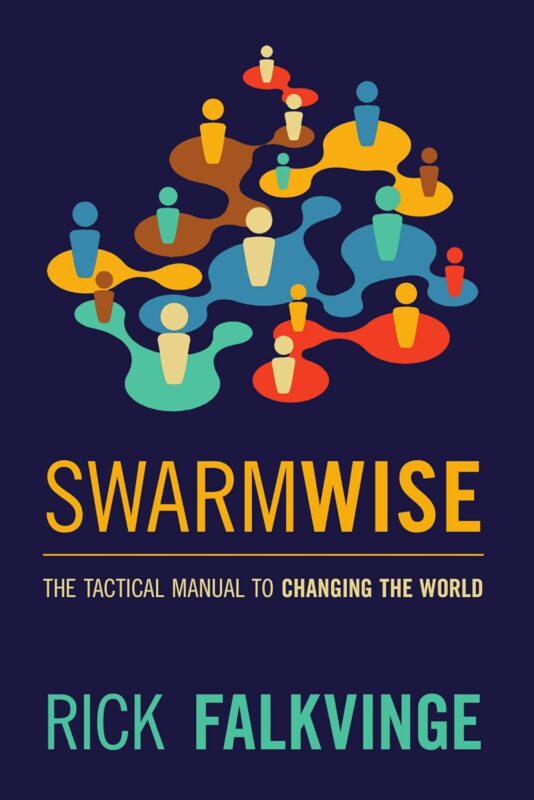
Swarmwise by Rick Falkvinge unlocks the tactical playbook for launching, scaling, and leading decentralized movements with a clarity and urgency born of firsthand experience. The book recounts how a provocative idea, articulated with tangible goals and accessible messaging, catalyzed the rapid growth of the Swedish Pirate Party into a major political force. Falkvinge anchors the reader in the logic of swarms—open, transparent, volunteer-driven organizations that mobilize on the basis of inspiration, shared vision, and actionable tasks.
Understanding the Swarm: Structure and Spirit
A swarm forms when a group of individuals coalesces around a compelling idea, creating a living network where each participant contributes according to capacity and inclination. Falkvinge shows that the swarm achieves both cost-efficiency and operational speed by focusing on what participants can do, fostering agency and initiative. This approach eliminates bottlenecks and accelerates decision-making. The swarm’s visible leadership acts as scaffolding, guiding momentum, and providing minimal structure while the wider group self-organizes to fulfill objectives. Relationships, not command hierarchies, bind the group.
Openness as Strategy
Swarmwise asserts that openness invites broad participation and removes barriers to entry. Anyone may contribute without formal recruitment or gatekeeping. Work lists remain public, and participants select tasks organically, driving parallel solution-finding. Openness accelerates learning cycles as the swarm iteratively tests and adapts, favoring methods that succeed through direct feedback. The book details how the absence of artificial boundaries enables the movement to scale rapidly and absorb new talent, often far outpacing the adaptive capacity of conventional organizations.
Transparency: The Foundation of Trust
Radical transparency lies at the heart of swarm effectiveness. The swarm’s communications, finances, and decision-making processes remain visible to all participants. This transparency inoculates the movement against rumor, distrust, and internal scandal. Public access to strategic discussions and conflict resolution allows participants to evaluate events for themselves, reinforcing confidence in the group’s integrity. When the swarm faces outside scrutiny, transparency becomes a shield, defusing sensationalism and anchoring the narrative in observable fact.
The Four Criteria for Viral Engagement
Falkvinge dissects the elements required to ignite large-scale grassroots engagement. A movement’s idea must be tangible—anchored in clear, measurable goals; credible—believable and grounded in real possibility; inclusive—open to participation from diverse individuals; and epic—framed to change the world or make a dramatic impact. When these criteria converge, word of mouth ignites, and the swarm expands at a rate traditional advertising cannot replicate. The book recounts how a single chat message in an obscure channel generated millions of website hits and catalyzed national and international media coverage within days.
Critical Mass: The Math of Mobilization
Swarmwise teaches that the success of a movement depends on activating a quantifiable number of participants whose engagement drives results. The book instructs organizers to perform the “math” early—define the target group, estimate the minimal participation required for success, and align initial tactics to meet that threshold. For the Pirate Party, the calculation identified 225,000 votes as the goal for electoral relevance, correlating this number to the size of the affected demographic. This numeric clarity directs recruitment, messaging, and strategy, transforming abstract ideals into actionable, attainable outcomes.
Launching for Impact
The launch of a swarm requires both anticipation and agility. Organizers must prepare structures for onboarding and immediate engagement, as the initial wave of interest will fade if not harnessed promptly. Falkvinge recounts the narrow window following the Pirate Party’s public debut, when hundreds of potential contributors arrived within hours. A functional forum or signup hub channels this influx, providing immediate ways for participants to connect and act. The founder’s capacity to respond, delegate, and empower others to lead becomes decisive in these early hours.
Subdividing for Growth: The Architecture of Groups
Swarmwise introduces three “magic” group sizes embedded in the human psyche—7, 30, and 150. Tight working teams function optimally at 7 members, extended teams at 30, and the social cohesion ceiling appears at 150, echoing Dunbar’s number. Organizers structure the movement to align with these natural group limits, subdividing the swarm geographically or functionally to preserve intimacy, manageability, and dynamism. This architecture prevents social overload, fosters local leadership, and ensures that the organization continues growing rather than stagnating at social bottlenecks.
Self-Organization and Emergent Leadership
Within the swarm, leadership emerges organically. Anyone may propose and execute projects by articulating an action and inviting others to join. Falkvinge insists that those who take initiative lead by example, setting a tone that others naturally follow. The founder’s behavior and values ripple outward, shaping the swarm’s evolving culture. Officers and formal roles support the swarm’s needs, operating with a “janitorial” mindset to clear obstacles and facilitate self-organization. Participants select leaders on merit and trust, not through imposed hierarchy, and roles evolve in response to the swarm’s real requirements.
Iterative Evolution: The Power of Experimentation
The swarm thrives on experimentation, embracing a continual process of trial, error, and improvement. Multiple individuals may pursue the same task using different approaches, with results rapidly filtering through the network. The swarm retains methods that succeed and discards those that do not, all without central planning. This evolutionary dynamic, powered by open communication and feedback loops, drives relentless refinement and learning.
Building and Sustaining Relationships
Relationships fuel the swarm’s growth and resilience. Falkvinge underscores the importance of social bonds, suggesting that organizers structure activities to facilitate introductions, encourage collaboration, and welcome newcomers. Informal gatherings and social events complement task-oriented meetings, weaving new participants into the movement’s fabric. Leaders nurture these relationships, recognizing that the organization exists in the web of connections among participants, not merely in formal structures.
Practical Tactics for Swarm Growth
Swarmwise offers a suite of practical tactics for sustaining growth and engagement. Organizers deploy forums, wikis, and collaborative spaces to enable communication and project coordination. They subdivide regions, assign initial tasks, and invite participants to select leaders. Competitions and shared goals foster motivation, while public progress updates fuel momentum. Falkvinge encourages founders to lag formal structures behind observed reality, codifying roles only after individuals have assumed them organically. This approach aligns the organization’s chart with actual patterns of activity, reinforcing authenticity and effectiveness.
Transparency as Antidote to Disruption
Attention-seekers and disruptive actors occasionally emerge in open systems. Swarmwise addresses this challenge by emphasizing transparency and group visibility. When individual motives clash with collective goals, open records and public discussion expose discrepancies, enabling the group to self-correct and marginalize disruptive behavior. The swarm’s resilience grows as participants witness problems addressed directly, reducing the risk of internal fracture or co-option.
Media, Messaging, and Perception Management
The book details methods for engaging both social and traditional media. Falkvinge advises that the swarm shape its own narrative by owning key issues and making communications accessible and consistent. He describes how media breakthroughs, op-eds, and press kits advance the swarm’s goals, and how visible, recognizable faces build public identity. Media engagement serves as both recruitment tool and force multiplier, amplifying the movement’s impact across wider audiences.
Beyond the First Success: Scaling and Sustaining the Swarm
Falkvinge analyzes the day after a movement achieves its first major victory. He urges organizers to anticipate shifts in energy, plan for internationalization, and avoid overreach that diffuses focus. The book closes by reinforcing the need to preserve core values, maintain open processes, and cultivate the next generation of leaders. As swarms scale across geographies and contexts, foundational practices—openness, transparency, and relationship-driven organization—anchor the movement against inertia and mission drift.
Swarmwise delivers a precise, actionable guide for activists, entrepreneurs, and leaders seeking to mobilize large numbers of people toward transformative goals. Rick Falkvinge demonstrates how an inspired, loosely coordinated group—operating with clear vision, structural agility, and deep trust—can achieve world-changing results with unprecedented efficiency. What potential lies in the next idea, waiting for a swarm to form around it, and how will you prepare to lead?