Common Sense
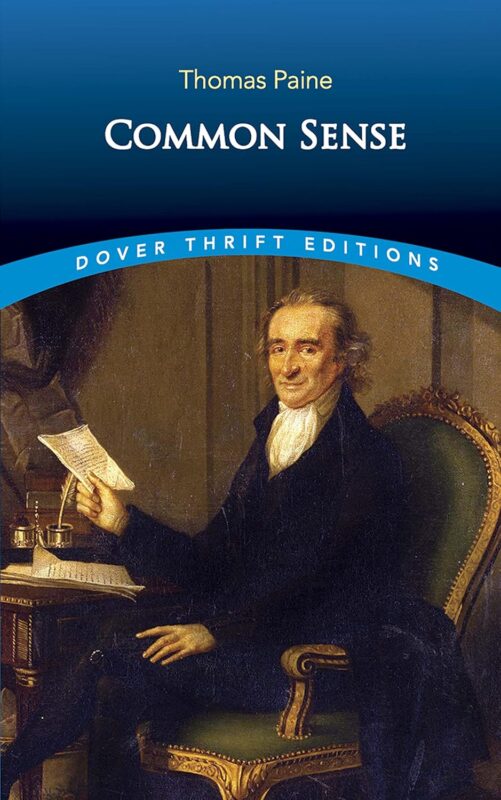
Common Sense by Thomas Paine electrifies the era with its uncompromising challenge to monarchy and its sweeping vision for a self-governing America. In the opening lines, Paine names the English king and Parliament as usurpers of the natural rights of Americans, and he strips the veneer of tradition from political power to reveal the mechanisms of oppression and the prospects for liberty. He advances a systematic argument, anchoring every claim in reason, historical precedent, and an emotional appeal to collective destiny.
Origins and Purposes of Government
Society originates from the innate needs of people. Government arises from the persistence of human vices. Society cultivates unity and fulfillment; government functions as an instrument for restraining chaos. In Paine’s construction, happiness springs from mutual affection, while government imposes necessary restrictions. The best government delivers protection at minimal expense to liberty and wealth, supporting security without infringing on natural rights.
Government, Paine insists, takes shape as a practical response to limitations in human virtue. In a hypothetical state of perfect morality, law and rulers would be obsolete. Instead, communities forfeit a portion of individual liberty, pooling resources to form a governing structure that defends property, life, and social order. This concession—voluntary, prudent, and specific—becomes the basis for legitimate government. Simplicity, efficiency, and transparency characterize the optimal model.
Paine constructs a scenario: A small band of settlers forms the first social compact, driven by necessity to cooperate, share resources, and confront external threats. When the group expands and complexity grows, they select representatives from among themselves, regularly rotate leadership, and maintain accountability. Such a system, rooted in direct interest and frequent elections, preserves a government responsive to the people’s needs.
Defects in the English Constitution
Paine attacks the complexity and opacity of the English Constitution. He dissects its core: monarchy, aristocracy, and commons. The monarchy holds executive power, the peers wield aristocratic privilege, and the commons provide a semblance of popular representation. Paine identifies a fatal flaw: hereditary offices alienate rulers from those they govern, allowing interests to diverge. He scrutinizes the supposed system of checks and balances, demonstrating that the crown dominates through patronage, control of legislation, and manipulation of national interest. Constitutional machinery, in this analysis, becomes a web of contradictions—formally divided, functionally fused.
He asserts that monarchy’s essence lies in exclusion and artificial elevation. The monarch, isolated from ordinary experience, assumes responsibilities that demand knowledge but occupies a position designed to prevent direct understanding. The peers inherit their status independent of merit or service, perpetuating a system resistant to reform. The commons, nominally representatives, must struggle against both king and aristocracy. Paine exposes the arrangement as a fiction—power concentrated at the top, liberty maintained only by the character of the people, not the structure of government.
The Fiction of Hereditary Succession
Paine dismantles the idea of hereditary monarchy as an affront to natural and divine order. No scriptural or rational basis exists for kings to rule by right of birth. He traces the rise of monarchy to ancient times, attributing its origin to pagan custom and subsequent imitation by the Israelites against explicit prophetic warning. He deploys biblical references to show divine opposition to the institution of kingship, citing the Book of Samuel and the rejection of monarchy as sinful.
Hereditary succession, he declares, compounds the dangers of monarchy by installing unqualified, sometimes incompetent, individuals in positions of power. Paine points to the cycles of violence, civil war, and social instability produced by dynastic disputes in English history. He catalogs the destruction wrought by contests for the throne and exposes the seductive logic of hereditary rule as a political convenience masquerading as destiny.
Paine strips away the mythology surrounding royal origin, proposing that the first kings emerged as leaders of bands of adventurers, usurping power through force or intrigue. With the passage of time, followers—motivated by disorder and uncertainty—embraced hereditary succession for the appearance of stability. This decision, once expedient, hardens into dogma. He concludes that both the institution and its transmission by birth undermine the collective good, foster corruption, and invite disaster.
America’s Distinct Identity and Opportunity
Paine reorients the colonial perspective. He calls Americans to see themselves as a new people, shaped by shared values and diverse origins, rather than as mere subjects of Britain. America’s population, drawn from throughout Europe, comprises a blend of backgrounds and aspirations. The old world has sent its persecuted and its seekers; in the new world, they find asylum and opportunity.
He discredits the notion of Britain as America’s “parent country,” substituting a broader genealogy that ties the colonies to Europe at large. The Atlantic, he points out, stands as a geographical boundary set by providence, reinforcing the separation of interests and destinies. This distance signifies a natural limit to imperial control.
Economic Imperatives for Independence
Paine presents a compelling case for economic independence. He demonstrates that the mercantile system imposed by Britain restricts colonial trade, subjects America to British wars, and exposes the continent to unpredictable costs and dangers. The American economy, grounded in agriculture and commerce, has matured; it can flourish through open trade with Europe. Dependence on British markets and protection holds no enduring benefit.
He challenges the claim that the colonies owe their prosperity to British rule, arguing that economic growth results from American resources and enterprise. He frames British military defense as a byproduct of imperial ambition rather than generosity. Paine draws attention to the strategic advantage of America’s resource wealth, access to European markets, and population growth. When he invokes Boston, he illustrates the price paid by American cities in loyalty to a distant king—the devastation of property, the suffering of families, and the arbitrary violence of military occupation.
Urgency of Immediate Action
Paine raises the stakes for delay. He addresses those who hope for reconciliation by forcing a reckoning with the consequences of compromise. Britain’s actions—acts of war, harsh reprisals, and the denial of colonial rights—have ruptured bonds of trust. He asks whether genuine affection or loyalty can survive the destruction of homes, livelihoods, and lives.
He asserts that reconciliation offers only the illusion of safety. The king’s authority remains absolute; any negotiated settlement will sustain imperial control and postpone the inevitable struggle for self-government. Paine amplifies the emotional and practical urgency: indecision allows further suffering, forfeits the advantages of momentum, and places future generations in jeopardy. The time, he proclaims, has found America ready.
Blueprint for a New Government
Paine envisions a continental union governed by representatives elected by the people. He proposes a system of annual assemblies, equal representation by districts, and rotation of leadership among the colonies. The Continental Congress, under his design, wields authority over general affairs, while local assemblies handle internal concerns.
He urges the creation of a Continental Charter—a written constitution establishing the rights of individuals, defining the powers and responsibilities of government, and ensuring the free exercise of religion. The charter, publicly proclaimed and celebrated, would symbolize the replacement of arbitrary power with the sovereignty of law. Paine encapsulates the principle: “in America THE LAW IS KING.”
He recognizes the necessity for careful planning and consultation, advocating for a Continental Conference to draft the charter. Delegates—selected from Congress, provincial assemblies, and the people at large—combine experience and legitimacy. Their collective wisdom provides the foundation for lasting peace, security, and liberty.
Moral and Political Destiny
Paine concludes with a call to action, transforming practical analysis into a visionary mission. America stands poised to establish an asylum for mankind, a sanctuary for liberty, and a model for future generations. He confronts those who hesitate with the risks of inaction: delay opens the door to tyranny, chaos, and the ambitions of opportunists.
The narrative turns from analysis to exhortation. Paine elevates the cause of American independence to a moral imperative, summoning his audience to defend the rights of man against oppression. He invokes the suffering inflicted by Britain, the warning signs of continued submission, and the possibility of creating a free, just, and prosperous society.
In a rhetorical flourish, he appeals to universal values and common cause. Freedom has been banished from Europe and hounded across continents. America can embrace this fugitive and build a new order—one that secures happiness and freedom for individuals, rewards virtue, and realizes the promise of self-government.
Enduring Influence and Relevance
Common Sense by Thomas Paine transforms a moment of uncertainty into a defining assertion of purpose. It supplies language, arguments, and structure to the movement for American independence. The pamphlet’s clarity, force, and coherence inspire collective action, unify disparate colonies, and articulate a political vision that transcends circumstance.
Paine grounds the American Revolution in reason, history, and moral necessity. He distills the complexities of constitutional theory, historical grievance, and economic interest into an accessible, compelling argument. His framework for government endures as a touchstone for debates over democracy, representation, and the limits of power.
What vision emerges from this text? A society governed by its own laws, drawing strength from unity, mutual respect, and shared commitment. Paine offers a model in which citizens, by deliberation and choice, shape institutions to secure their rights. The work radiates urgency and possibility, compelling its readers to act decisively and embrace the responsibilities and rewards of freedom.
Common Sense by Thomas Paine claims a singular place in world history, catalyzing the break with empire and setting the stage for a new experiment in self-government. The legacy of its arguments, structure, and rhetoric persists—shaping political discourse, inspiring movements for justice, and affirming the enduring value of clear reason, public virtue, and the courage to found anew.