Empire & Church: Anglo-America’s Buyout of the Vatican and the Hyper-Modern Demise of Catholicism
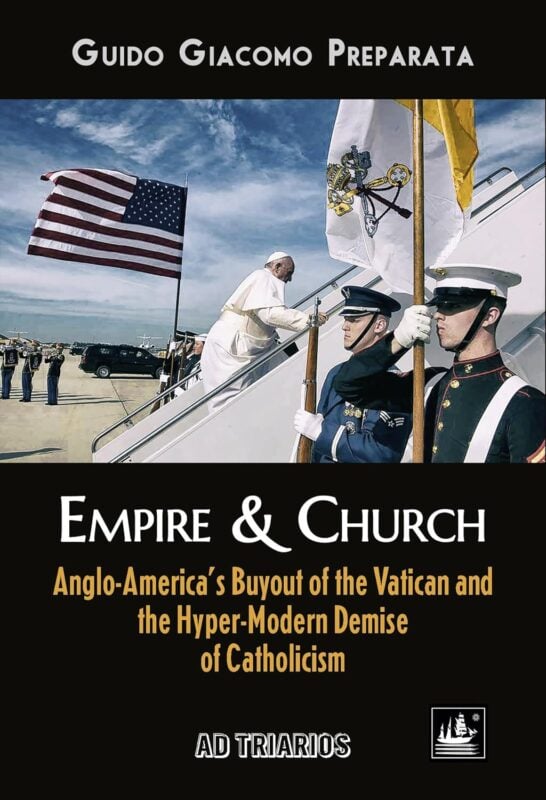
Empire & Church: Anglo-America’s Buyout of the Vatican and the Hyper-Modern Demise of Catholicism by Guido Preparata exposes the transformation of the Catholic Church into an instrument of Anglo-American power, documenting the convergence of military, financial, and spiritual influence into a unified techno-fascist structure. Preparata assembles a deeply historical and uncompromising narrative that tracks the spiritual co-optation of Rome by imperial elites, grounding each move in institutional, political, and theological decisions that hollowed out the Church’s autonomy while sustaining its image.
The Imperial Architecture of Power
Preparata identifies Anglo-American imperialism as a durable, evolving machine powered by financial networks, military enforcement, and cultural control. At its core lies the “Techno-Structure,” an integrated system in which corporations, intelligence agencies, universities, media conglomerates, and international institutions function not as independent bodies, but as operational arms of a single imperial logic. This system projects itself not as conquest but as progress, exploiting symbols of democracy, freedom, and science to legitimize expansion.
Financial institutions and technocratic elites fuse private and public authority, rendering the separation of church and state obsolete not in theory but in geopolitical function. Preparata describes this system as driven by techno-fascism—an ethos that refines and modernizes the mechanisms of coercion through optimization, surveillance, and relentless bureaucratic expansion.
The Role of the Church in Empire
Empire demands sacred cover. For Anglo-America, conquest must carry the semblance of moral right. Preparata argues that the Vatican, as the last surviving institution with global symbolic authority, provides the necessary consecration for imperial endeavors. The Church does not merely collaborate. It plays a ritual function, channeling its credibility into the public sacralization of global capitalism and war.
He traces how the Church shifted from a rival imperial force—an independent seat of sovereignty—to a legitimizing subsidiary. The process unfolds gradually: from cautious diplomacy during the World Wars to strategic alliances during the Cold War to wholesale submission in the era of globalization. Benedict XVI’s resignation and the rise of Pope Francis mark the culmination of this arc. Preparata calls this the buyout: a geopolitical acquisition disguised as ecclesial reform.
Modernity and Its Ghost Institutions
Preparata defines hyper-modernity as a phase of intensified simulation, where institutions persist in form but collapse in function. The Church still claims spiritual authority, yet its actions serve the economic and military interests of the Western order. It no longer confronts injustice with transcendental claims. It affirms the secular logic of humanitarian war, neoliberal development, and technological progress. In this phase, truth yields to narrative. Prophecy gives way to branding.
The Vatican’s function under this system mirrors that of other institutional husks—national parliaments, public universities, regulatory agencies—whose structural language remains while their power concentrates elsewhere. Preparata insists this transition is not accidental. The Techno-Structure requires these vestiges to sedate unrest, to assure populations that tradition continues. But behind the curtain, governance consolidates through opaque networks beyond constitutional limits.
From Guelph to Ghibelline: The Reversal of Strategy
Historically, the Church employed a Guelph strategy: seeking to dominate the temporal order through spiritual means. Popes cultivated alliances, imposed doctrines, and educated elites to steer the state. Preparata argues that today’s order imposes a Ghibelline inversion: the state absorbs the Church, reducing it to a symbolic armature within an overarching regime of control. The empire no longer fears heresy; it instrumentalizes faith.
He shows how Neoconservatives such as Michael Novak, George Weigel, and Richard Neuhaus advanced this strategy. They promoted an interpretation of Catholicism tailored to capitalism: a creed of market freedom, family values, and Western exceptionalism. This doctrine aligns seamlessly with American foreign policy and domestic ideology. It provides a theological cover for preemptive war, deregulation, and cultural hegemony.
The Erasure of Nationhood and the Rise of the Global Commonwealth
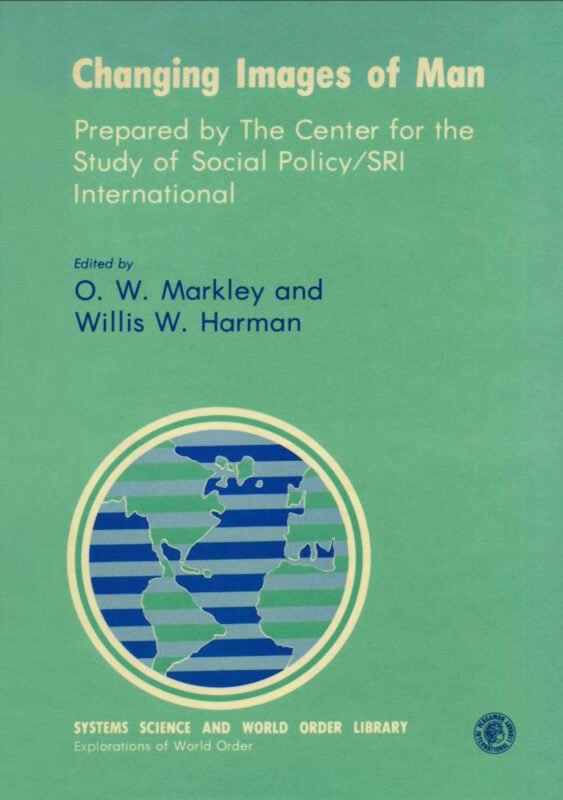
Preparata places this transformation within a broader historical pattern: the erasure of nation-states as meaningful centers of power. He traces the ideological groundwork for this shift to early 20th-century Anglo-American intellectuals who, under the guise of humanitarian universalism, constructed the conceptual basis for a world state. Institutions like the League of Nations and later the United Nations serve as early scaffolds.
Writers such as G.A. Borgese, Lewis Mumford, and Julian Huxley envisioned a global commonwealth administered through technocratic expertise. Their vision replaces divine order with managerial rationality. Preparata presents this project not as a utopian failure, but as a blueprint for domination rebranded as peace. He locates its implementation not in Geneva or New York, but in the transnational corridors of finance, defense, and soft power.
The Aesthetic of Pain and the Machinery of Consent
To understand the psychological regime of the Techno-Structure, Preparata draws from Ernst Jünger’s essay On Pain. Modernity anesthetizes. It promises comfort through control, insulation through surveillance. But this suppression of pain removes moral resistance. War becomes entertainment. Suffering becomes a logistics issue. The populace becomes an audience, watching geopolitical violence through curated screens, affirming it with sanitized rituals.
The Church participates in this sedation. Instead of challenging the logic of total war and endless growth, it blesses the spectacle. Its sacraments no longer sanctify sacrifice for truth but absolve complicity in systemic aggression. The Eucharist and the drone strike coexist in the same moral continuum. Preparata shows how this confluence emerges not from heresy but from managerial alignment.
Ratzinger, Bergoglio, and the Managed Transition
The resignation of Pope Benedict XVI marked the institutional climax of the Vatican’s integration into the imperial apparatus. Preparata treats this moment not as a theological event, but as a strategic reshuffle. He asserts that pressure from internal factions aligned with Western power brokers facilitated the transition. Pope Francis emerges as the preferred face of a post-sovereign Church: media-friendly, socially engaged, economically docile.
Francis’s papacy aligns with the post-2008 phase of Western governance: a pivot from neoliberal triumphalism to crisis management. The Church now focuses on climate, migration, and poverty—not as challenges to global systems but as fields for administrative compassion. Preparata contends this redirection preserves the global architecture by deflecting energy from structural reform toward moral sentiment.
The Disarmed Church and the Illusion of Autonomy
Preparata identifies the paradox at the heart of contemporary Catholicism: it speaks of the poor yet serves the powerful. It condemns violence yet legitimizes empire. Its claim to universality conceals its role as a subcontractor in a planetary hierarchy. The Church has not been defeated. It has been integrated.
He treats this integration as an historical inevitability within a specific geopolitical order. The Church’s marginalization did not result from decline. It stemmed from absorption. The Anglo-American Techno-Structure requires symbols of moral authority to sustain its legitimacy. The Vatican provides global reach, deep ritual capital, and historical continuity. These assets cannot be fabricated. They must be acquired.
Techno-Fascism and the Moral Software of Control
Preparata defines techno-fascism as the ideological infrastructure of the hyper-modern order. It does not impose conformity through direct coercion. It engineers consent through systems design. The software of control embeds itself in institutions, routines, and narratives. It adapts to protest, co-opts critique, and neutralizes dissent by absorbing it into reformist discourse.
This system uses science, humanitarianism, and diversity as instruments. These terms no longer function as values. They operate as operational codes. The Church participates not because it has changed doctrine but because it accepts the premises of this code: efficiency over truth, safety over sovereignty, management over prophecy.
Conclusion: After the Church
Preparata closes with a speculative imperative. The current order cannot sustain spiritual life. The fusion of empire and church dissolves the conditions for authentic faith. Yet he avoids nostalgia. The task lies ahead. The collapse of traditional institutions creates a vacuum. From this void, new forms must emerge. These forms will not come from within the Techno-Structure. They must arise outside its logic.
He calls for a confederation of free communities grounded in pacifism, cooperation, and territorial autonomy. These communities must detach from the monopolies of money, energy, and medicine. They must reconstruct economic life around mutual aid and local governance. The Church, as an institution, cannot lead this transformation. It has forfeited that role. The Spirit, however, remains ungoverned.