George Bush: The Unauthorized Biography
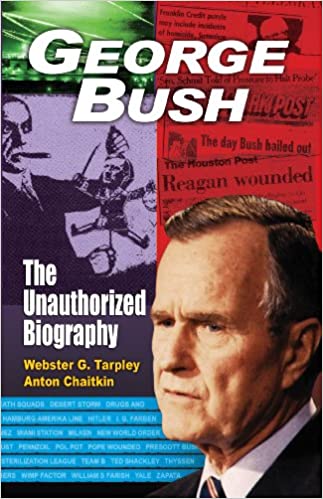
George Bush: The Unauthorized Biography by Webster G. Tarpley and Anton Chaitkin unearths the hidden history, elite networks, and covert operations that propelled George H.W. Bush to the presidency and shaped the late twentieth century’s world order.
The Formation of an American Dynasty
From the first page, Tarpley and Chaitkin reconstruct the origins of the Bush family’s ascent. Prescott Bush, the patriarch, did not merely inherit privilege; he forged his alliances at Yale’s Skull and Bones and cemented lifelong bonds with the Harriman banking dynasty. The authors trace how, during World War I, Samuel P. Bush, Prescott’s father, administered munitions contracts as chief of the Ordnance, Small Arms and Ammunition Section of the War Industries Board, operating at the intersection of finance, war, and industry. Bert Walker, George H.W. Bush’s maternal grandfather, anchored the family’s transition from Midwest respectability to New York banking power. Marriages joined the Bushes to the Walkers and, through Walker, to the Harrimans—enabling Prescott to step into the circles that determined American economic and foreign policy.
Banking, Secret Societies, and the Architecture of Power
Tarpley and Chaitkin interrogate the function of Skull and Bones as more than a collegiate fraternity. The society orchestrates networks of trust, loyalty, and shared secrecy that persist across generations and fuse with the corridors of Wall Street and Washington. Through these ties, the Bushes gain entrée into Brown Brothers Harriman, one of the era’s most influential investment banks. Averell Harriman, future ambassador and global statesman, emerges as both patron and architect. The authors argue that financial institutions like Brown Brothers Harriman operated as command centers for policies that extended from New York to London and Berlin. Prescott Bush, rising through the bank’s ranks, participates in transatlantic deals that shape the fate of nations.
The Hitler Project: Financing Dictatorship
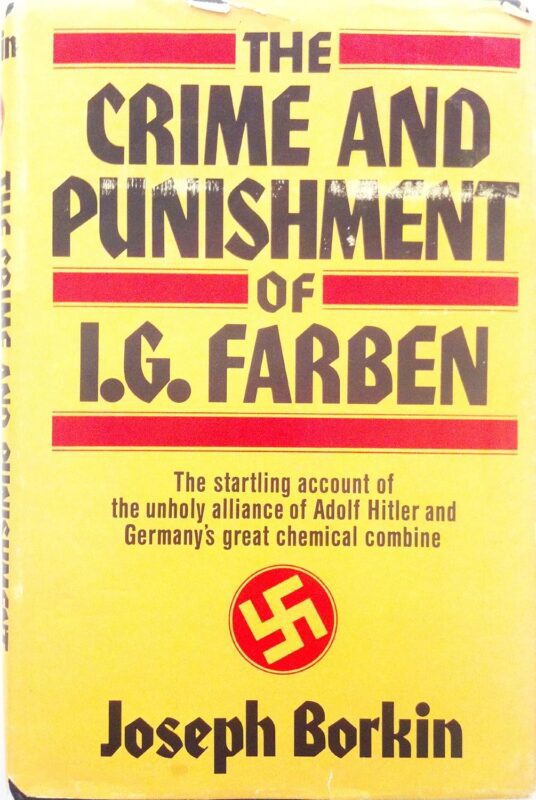
Prescott Bush’s banking activities connect the family to one of the twentieth century’s pivotal tragedies. Tarpley and Chaitkin detail the mechanisms by which American capital flowed to Nazi Germany in the interwar years, enabling Hitler’s rearmament. They assert that the Union Banking Corporation, managed by Bush and his partners, acted as a conduit for investments in Thyssen interests, crucial to the Nazi war machine. As Congressional investigations and public revelations later expose these links, the authors situate the Bush legacy within a matrix of profit, ideology, and moral blindness.
Race Science, Eugenics, and Policy
The authors draw a direct line from the elite fascination with “race science” to the formation of public policy. Prescott Bush’s alliances, according to Tarpley and Chaitkin, fostered the entrenchment of eugenic theories in institutions like Yale and among the Rockefeller Foundation’s philanthropic activities. These convictions permeated the debates on population control, welfare, and the so-called improvement of American stock. The book asserts that these ideas endured across generations, shaping the worldview and priorities of George H.W. Bush as he rose through government.
The Path to Political Power
Prescott Bush’s trajectory through finance enabled his election to the U.S. Senate, where he influenced foreign and domestic policy during the Eisenhower era. The book shows how his patronage, friendships, and strategic interventions cleared the way for George H.W. Bush’s entry into public life. The younger Bush’s early career, far from independent, relied on the power and connections of his forebears. Tarpley and Chaitkin document his forays into the Texas oil business, arguing that these ventures were less entrepreneurial risk and more the calculated placement of a family asset in an emerging region of strategic importance.
Skull and Bones: Yale, Class, and Control
The narrative of George H.W. Bush’s undergraduate years at Yale reveals the persistence of Skull and Bones as a gateway to the American ruling class. The authors describe the rituals, relationships, and expectations that set Bush apart from his peers. These bonds, the book claims, outlast mere friendship or professional connection—they constitute a shadow government, a means for maintaining continuity of elite rule across political transitions.
The Intelligence Apparatus
With George H.W. Bush’s appointment as CIA Director in 1976, Tarpley and Chaitkin argue that the convergence of financial, political, and intelligence networks becomes explicit. They examine Bush’s relationships with figures such as William Casey, Donald Gregg, and other intelligence operatives. This period, the authors contend, demonstrates Bush’s fluency in covert action, plausible deniability, and the management of sensitive information.
Iran-Contra and the Shadow Government
The Iran-Contra scandal emerges as a defining episode in Bush’s vice presidency. The authors detail how, under National Security Decision Directives, Bush oversaw crisis staffs coordinating clandestine operations—arms shipments, drug trafficking, and support for Contra forces. Tarpley and Chaitkin position Bush as the “kingpin” of these activities, supported by a cadre of loyalists and shielded by interagency complicity. They connect the drug trade’s devastation in American cities to White House decisions and suggest that the “war on drugs” functioned as a cover for criminal enterprise and political repression.
Media Control and the Manufacture of Consent
The book scrutinizes the production of Bush’s public image. Tarpley and Chaitkin assert that mainstream biographies recycle official press releases, manufacturing an aura of humility and self-reliance symbolized by the oft-repeated story of Bush’s “red Studebaker” drive to Texas. The authors identify these narratives as deliberate mythmaking, designed to obscure elite sponsorship and systemic advantage. The book tracks how records vanish, witnesses are silenced, and stories inconvenient to the Bush dynasty disappear from the public record.
The Gulf War and the “New World Order”
As president, George H.W. Bush launched Operation Desert Storm and declared the advent of a “New World Order.” Tarpley and Chaitkin portray the Gulf War as a premeditated act of imperial violence, executed to secure oil interests, demonstrate military dominance, and reshape global power structures. The authors argue that Bush’s close relationships with the Kuwaiti royal family, British policymakers, and Wall Street interests influenced every decision. The war’s aftermath, they claim, set a precedent for later interventions and established a new model of executive authority unconstrained by Congressional or popular oversight.
Networks, Power, and Consequence
Throughout the book, Tarpley and Chaitkin chart the mechanisms of power that define the Bush legacy. The family’s integration into global finance, their participation in covert operations, and their control over media and political institutions generate outcomes that ripple across continents. The authors identify key moments—Bush’s involvement in Watergate, his tenure as UN Ambassador, his time in Beijing, and the leveraging of leveraged buyouts—that reveal a pattern: the orchestration of events to expand the reach and security of an oligarchic elite.
The Book’s Argument: Accountability and Exposure
Why should the public scrutinize the career of George H.W. Bush and his family’s legacy? Tarpley and Chaitkin contend that accountability begins with knowledge. The book provides a roadmap through the archives of hidden influence, naming names, tracing funds, and exposing the continuity of elite control. They encourage readers to interrogate official narratives, recognize the patterns of cover-up and mythmaking, and demand genuine transparency from those who seek the power to wage war, shape economies, and determine the fate of nations.
The Central Role of Family, Loyalty, and Ambition
The biography never loses sight of the personal ambitions and obsessions that drive its protagonists. Bush’s career, the authors argue, depends less on personal brilliance or policy expertise than on a capacity to mobilize networks—family, friends, fellow Bonesmen—on behalf of shared interests. This ability, honed across decades and reinforced by mutual loyalty, enables the persistence of a system that prioritizes group survival over public good.
A Warning for the Future
Tarpley and Chaitkin close their account with a warning. The consolidation of financial, political, and covert power within the hands of interconnected dynasties threatens the fabric of democratic society. As economic crises deepen and global conflicts proliferate, the structures analyzed in this book demand renewed vigilance and civic action. The authors urge readers to study the evidence, pursue the facts, and challenge the self-justifying mythologies that insulate powerful families from scrutiny.
Convergence of Evidence
The book draws on Congressional testimony, declassified documents, biographies, and contemporary journalism to sustain its argument. The synthesis of disparate evidence produces a compelling case: the ascendancy of George H.W. Bush reflects a convergence of inherited privilege, secret societies, intelligence operations, and media management. These forces, once set in motion, do not dissipate with the close of a single administration—they persist as structural features of the American order.
The Relevance for Contemporary Readers
What does this history reveal for those living in a world shaped by globalization, endless war, and expanding executive authority? Tarpley and Chaitkin offer their biography as both a case study and a warning. The exercise of power without public oversight, they argue, breeds impunity, secrecy, and the erosion of republican institutions. For readers seeking to understand the true foundations of modern American politics, the story of the Bush family stands as an indispensable chapter.
Search Engine Optimization
George Bush: The Unauthorized Biography by Webster G. Tarpley and Anton Chaitkin provides an exhaustive exploration of the Bush family’s role in American finance, politics, intelligence, and war. Readers searching for “George Bush secret societies,” “Prescott Bush Hitler banking,” “Skull and Bones influence in politics,” “Bush family Iran-Contra,” and “Bush dynasty Gulf War” will find meticulously sourced analysis. The book is a must-read for those interested in U.S. presidential history, elite power structures, the intersection of finance and politics, and the covert forces that have shaped modern America. Tarpley and Chaitkin’s work stands as a compelling exposé, challenging readers to confront the realities behind campaign mythologies and state-sanctioned narratives.