Confessions of an Illuminati Volume IV: American Renaissance 2.0 and the missing link from the Invisible World
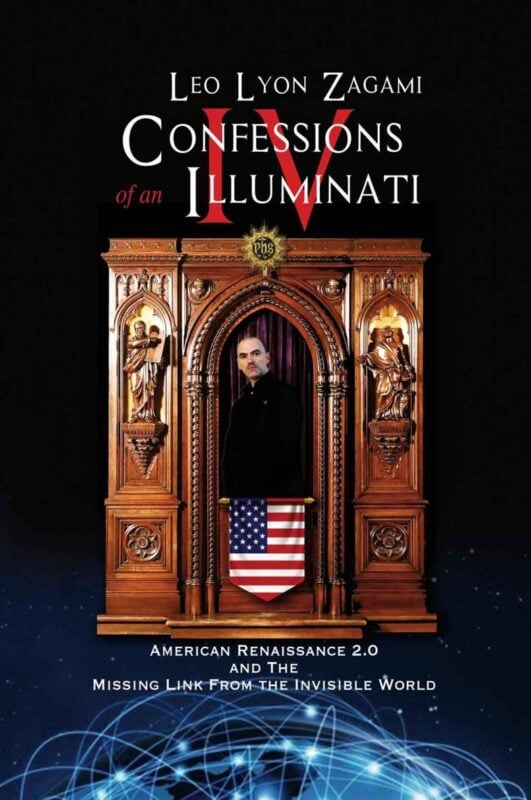
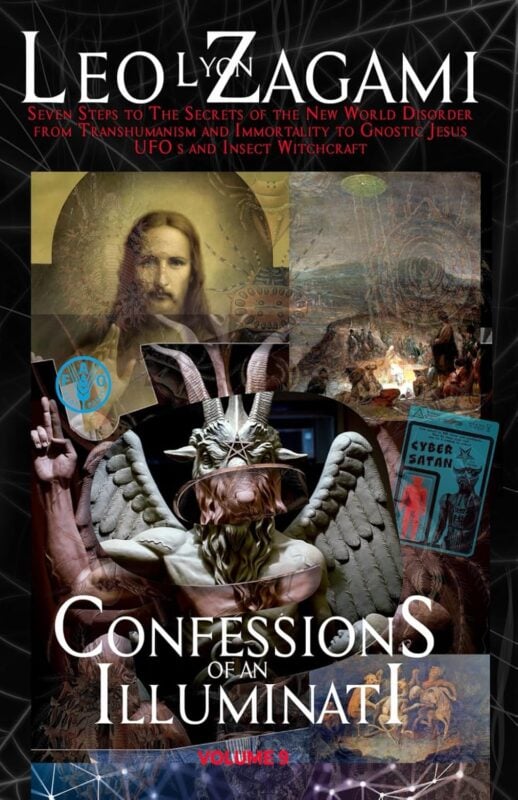
Confessions of an Illuminati Volume IV: American Renaissance 2.0 and the Missing Link from the Invisible World by Leo Lyon Zagami situates the reader inside a vivid confrontation with spiritual and political forces at play in American and global society. Zagami asserts that an unseen realm—populated by entities known as Archons, demons, angels, and elementals—interacts continuously with material existence, influencing the trajectory of human history, political power, and individual lives. This book builds its case by integrating occult philosophy, biblical references, secret society lore, and recent events, crafting a charged thesis on the manipulation of destiny and culture.
Introduction to the Invisible World
Zagami draws from esoteric traditions and his own research to propose the existence of an “invisible link”—a hidden dimension guiding human actions, societal trends, and political developments. He invokes ancient texts, Gnostic teachings, and biblical sources to illustrate a world layered beyond sensory perception, populated by entities that exert influence through both subtle and dramatic means. The author characterizes these forces as capable of predetermining outcomes, asserting that the concept of free will collapses under the weight of occult intervention unless individuals arm themselves with spiritual awareness and faith. This invisible world, Zagami contends, becomes accessible not through skepticism but through the disciplined study of mystical, religious, and conspiratorial traditions.
Spiritual Conflict and the Role of Faith
Human choices, according to Zagami, generate and attract spiritual entities. Evil thoughts and actions invite predatory beings, while righteousness aligns individuals with angelic guardians. He explores the generational impact of sin, pointing to biblical passages that describe the inheritance of spiritual burdens from ancestors. This dynamic, the author suggests, explains the resilience of Illuminati bloodlines and the recurrence of destructive patterns in global leadership. Zagami maintains that faith in Jesus Christ provides the decisive spiritual weapon in this battle, positioning Christian belief as the fulcrum on which individual and collective destinies turn.
Secret Societies and the Architecture of Control
Throughout the text, Zagami identifies the Illuminati, Sabbatean Frankists, and particularly the Jesuits as primary engineers of societal manipulation. He argues that these groups operate through the propagation of materialism, technological obsession, and spiritual ignorance. The Jesuits, in particular, receive attention for their alleged involvement in shaping the intellectual and cultural trajectory of Western civilization, especially via the suppression or redirection of mystical knowledge. Zagami describes the Jesuit “fourth vow” of allegiance to the Pope as a mechanism for centralized control, linking it to broader patterns of globalist influence.
Occult Politics: The 2016 U.S. Election and Chaos Magic
Moving from metaphysical assertions to contemporary history, Zagami examines the 2016 U.S. presidential election as a case study in occult warfare. He discusses how chaos magicians and practitioners of New Thought philosophies sought to influence the outcome, turning collective intention and symbolism into a potent political force. The author references Gary Lachman’s Dark Star Rising and other contemporary sources, tracing the use of internet memes, magical rituals, and hyper-sigils as tools for altering reality. Zagami suggests that both Trump’s supporters and his opponents engaged in ritualistic practices, with Wiccans, occultists, and Satanists organizing spells intended to hinder the president’s agenda.
The Egregore and the Power of Thoughtforms
Zagami emphasizes the importance of the egregore, a thoughtform or psychic entity born from the collective mind of a group. This entity, once established, acts autonomously, shaping group behavior and reinforcing its own existence. Within the context of modern politics, egregores become mechanisms for channeling mass intention, making them formidable engines of both creation and destruction. The author positions the egregore at the center of contemporary struggles, arguing that understanding and neutralizing these group minds is crucial for spiritual sovereignty.
Gnosticism, Archons, and the Prison of Material Existence
The narrative delves deeply into Gnostic cosmology, focusing on the concept of the Archons—cosmic jailers who enforce ignorance and subservience within the material realm. Zagami draws parallels between these ancient entities and modern depictions of the Men in Black, suggesting that stories of alien interference and government secrecy stem from deeper occult truths. The Archons, according to the Gnostics and echoed by Zagami, aim to keep humanity ignorant of its divine origin, feeding on fear, ignorance, and superstition. He references historical attempts to erase or hide knowledge of the Archons, alleging a long-standing campaign by the Illuminati and their ecclesiastical allies to suppress spiritual awakening.
Historical Sabotage of Mystics and Sages
Zagami situates his argument within a lineage of persecuted truth seekers, citing figures such as Socrates, Galileo, and Giordano Bruno as examples of individuals targeted by Archonic forces for attempting to illuminate humanity. These cases, he claims, illustrate a recurring pattern: those who seek to elevate consciousness or challenge the prevailing order often face swift and brutal suppression. This suppression extends into the present, as contemporary spiritual movements and alternative thinkers encounter both institutional resistance and supernatural opposition.
The Apocalypse, Enochian Magic, and the Watchtowers
A major theme in the book is the assertion that occult rituals—particularly those derived from Enochian magic—play an active role in accelerating the approach of the Apocalypse. Zagami describes the work of John Dee and Edward Kelley, who developed a system of communication with “angels” and created the Enochian Calls, a series of invocations designed to open gateways known as the Watchtowers. These gates, he argues, serve as portals for interdimensional beings, with the successful completion of the rituals purportedly triggering world-altering events. The narrative ties these magical systems to both historical and current events, asserting that practitioners such as Aleister Crowley and his followers have continued this work, influencing the spiritual climate of the modern era.
Numbers, Symbols, and the Hidden Language of Power
Zagami explores the symbolic significance of numbers—especially the number four and the infamous 33, tied to Freemasonry and Christian mysticism. He interprets recent events through the lens of numerical symbolism, suggesting that world leaders and occultists employ coded gestures to communicate allegiance and intent. This pattern, the author suggests, enables insiders to recognize one another while signaling to those with the knowledge to decode their messages. Zagami links these gestures to larger strategies of chaos, population control, and spiritual subversion.
Technology, Materialism, and the Devolution of Consciousness
As the narrative unfolds, Zagami critiques the modern obsession with technology and material possessions. He contends that smartphones and digital media, while offering convenience, erode cognitive capacity and spiritual awareness. This technological saturation, he warns, breeds passivity, division, and a loss of higher purpose. The resulting “soulless generation,” shaped by consumerism and instant gratification, becomes vulnerable to manipulation by hidden elites and supernatural forces alike. He locates this pattern within a broader project orchestrated by Jesuit and Illuminati interests to produce a pliable, docile population.
The Enneagram and New Age Distractions
Zagami addresses the proliferation of psychological and spiritual tools such as the Enneagram, labeling them as modern diversions engineered by occult networks to distract from true spiritual work. He critiques the rise of New Age movements, arguing that they dilute and misdirect the search for transcendence, substituting shallow practices for authentic spiritual engagement. For the author, Christian faith offers the only viable antidote to these seductive distractions, providing a framework for both resistance and renewal.
Governmental Experiments in the Occult
The text asserts that American intelligence agencies, including the CIA, have explored occult sciences and interdimensional contact as part of their clandestine research. Citing projects such as MKOFTEN and MKCHIKWIT, Zagami claims that officials conducted experiments in psychic phenomena, black magic, and even the summoning of non-human entities. These efforts, he argues, demonstrate the seriousness with which the ruling class approaches the hidden dimensions, revealing a willingness to harness forbidden knowledge in pursuit of power.
Patterns of Control: From Atlantis to the United Nations
Zagami draws historical connections between ancient civilizations, the spread of secret societies, and modern institutions such as the United Nations. He identifies symbolic continuity in rituals, architecture, and numerology, linking the esoteric traditions of Egypt and Atlantis to the contemporary globalist agenda. By tracing these patterns, the author argues that spiritual warfare and conspiratorial manipulation remain consistent features of human society, adapted to changing times and technologies but grounded in perennial strategies.
American Renaissance 2.0: A Call for Spiritual Awakening
The book climaxes with a call for an “American Renaissance 2.0,” presenting the United States as the last bastion of hope for the restoration of spiritual and cultural vitality. Zagami urges readers to recognize the spiritual dimensions of current events and to respond with informed faith and courage. He characterizes the present moment as one of extraordinary peril and opportunity, framing resistance to occult and globalist influence as both a patriotic and spiritual duty. The author envisions a revitalized America, leading a global revival rooted in Christian values, intellectual freedom, and the unmasking of hidden adversaries.
Conclusion: The Stakes of Invisible Warfare
Zagami’s thesis converges on the assertion that the future depends on humanity’s capacity to perceive and confront the forces shaping reality from behind the scenes. He contends that spiritual awareness, intellectual vigilance, and collective resistance are essential to averting catastrophe and achieving true sovereignty. The struggle, as he frames it, involves not only visible political contests but also an ongoing battle for the soul of civilization, waged across the boundaries of material and spiritual existence. By exposing the mechanisms of occult control, the book seeks to empower readers to choose the path of light, faith, and transformative action.
In Confessions of an Illuminati Volume IV: American Renaissance 2.0 and the Missing Link from the Invisible World, Leo Lyon Zagami invites readers into a world where spiritual warfare, hidden agendas, and the quest for freedom intersect at the heart of modern history. The book’s detailed exploration of occult systems, secret societies, and contemporary crises challenges readers to question appearances, awaken to deeper realities, and join the unfolding drama of resistance and renewal.

About the Book