A Casual View of America: The Home Letters of Salomon de Rothschild, 1859–1861
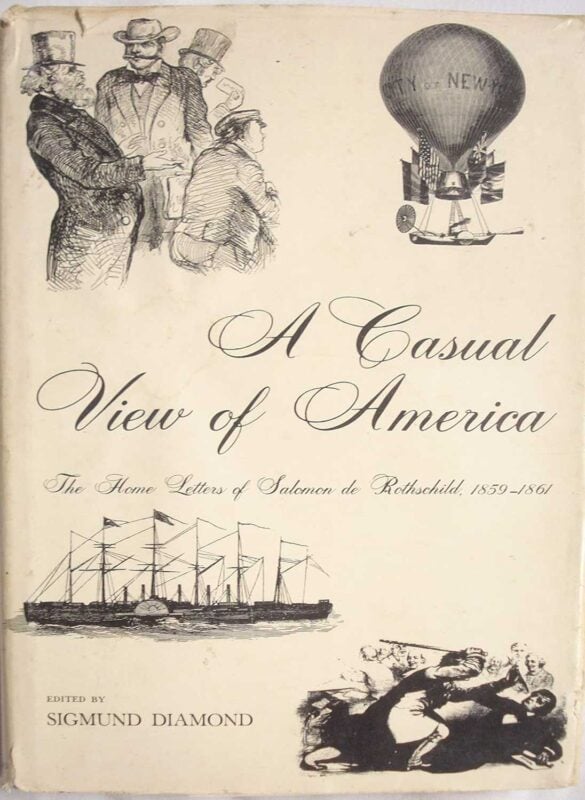
A Casual View of America: The Home Letters of Salomon de Rothschild, translated and edited by Sigmund Diamond, reveals a panorama of American life between 1859 and 1861 through the perspective of a European aristocrat. Salomon de Rothschild’s correspondence, addressed to his family, forms a living document of a nation on the verge of civil conflict, blending detailed observations of daily life with incisive critiques of society and politics. In these letters, the Rothschild legacy, the pulse of financial interests, and the intellectual ferment of Parisian salons merge within the world of antebellum America.
The Rothschild Worldview and the American Moment
Born in 1835, Salomon de Rothschild grew up amidst the intellectual elite of Paris. The Rothschild family home, a center for luminaries such as Heinrich Heine and Balzac, shaped his sensibilities, expectations, and consciousness of privilege. In 1859, Salomon crossed the Atlantic, not merely to observe but to probe American realities during a momentous transition. His family’s extensive investments in railroads, government bonds, and state finances linked his mission to the material fortunes of the United States, while his upbringing infused his responses with a keen awareness of social status and institutional order.
Arrival in New York: The Interplay of Aristocracy and Democracy
Upon arriving in New York, Salomon de Rothschild discerned patterns of exclusivity beneath American egalitarian ideals. He found society marked by mysterious rules of fashion, access, and inclusion, decoupled from wealth, education, or official position. Invitations and social encounters followed codes invisible to outsiders and inexplicable even to participants. Within the city’s elite gatherings, formality governed every interaction, yet the rationale behind status distinctions remained elusive. Rothschild’s letters reveal his fascination with and skepticism toward this “aristocracy without lineage,” where prestige depended on perception and whim.
The Political Unrest and the Specter of Civil War
Rothschild’s journey unfolded against a backdrop of national upheaval. In December 1859, the execution of John Brown sharpened the political divide. The conflict between North and South dominated conversations, shaped commercial sentiment, and set the stage for an impending crisis. Rothschild observed how agitation—driven by figures such as Henry Ward Beecher and inflamed by the press—intensified hostilities over slavery. His reports documented congressional paralysis, violent confrontations, and the pervasive sense of uncertainty among political leaders and businessmen alike.
Slavery and the Limits of Reform
The question of slavery permeated Rothschild’s letters. He recognized the violence of political rhetoric, the danger of agitators, and the fear of insurrection in the South. In his analysis, anti-slavery activism, led by clergy and reformers, catalyzed Southern intransigence and provoked reprisals against dissenters. Public whippings, tar-and-featherings, and legal intimidation formed a pattern of reaction. Rothschild identified the Republican ascendancy and the potential election of a president opposed to slavery’s expansion as flashpoints for disunion.
The Machinery of Democracy and Its Discontents
Rothschild’s scrutiny extended to American governance. He dissected the peculiarities of office-holding, where electoral cycles and universal suffrage produced transient allegiances and rewarded patronage. Municipal budgets swelled not from public investment, but from “enormous taxes” diverted into party machines and political rewards. In his letters, Rothschild cast doubt on the efficacy of American democracy, arguing that the absence of stable, irremovable authority led to instability and mediocrity. This tension surfaced most clearly in his judgments of congressional procedure, the character of diplomats, and the selection of public officials.
The Spectacle of Urban Life
Within New York and beyond, Rothschild cataloged daily scenes of urban vigor and chaos. Fires broke out with startling frequency; volunteer fire brigades competed for priority, sometimes quarreling before battling flames. The city’s parks, especially the emerging Central Park, drew pride and attention, symbolizing a civic ambition both admirable and costly. Harsh winters intensified the challenges of urban life, yet Rothschild detected a distinct quality in American cold—a bracing, invigorating air unfamiliar in Europe.
Travel, Infrastructure, and Social Customs
Rothschild experienced American travel as a series of inconveniences, inefficiencies, and occasional amusements. Train journeys required multiple changes and exposed travelers to a democratic mix of companions—regardless of class, everyone jostled together. Delays and mishaps tested patience, and the amenities of travel lagged behind European standards. In city and countryside, Rothschild described the interplay of formality and informality, from New Year’s social calls to rowdy political balls at Tammany Hall. These rituals, blending civility with improvisation, offered both spectacle and insight.
Encounters with Notable Americans and Political Actors
Rothschild’s itinerary brought him into contact with prominent politicians, diplomats, and intellectuals. He evaluated their manners, intellects, and suitability for high office. Some, like Minister to France Charles James Faulkner, he found coarse or ill-prepared. Others, such as presidential candidates and congressional leaders, impressed with their eloquence or energy, but seldom with the attributes he esteemed in European statesmen. These interactions illustrated both the openness and volatility of American political culture.
Economic Concerns and Global Finance
The Rothschild letters foreground the entanglement of American and European economies. Political uncertainty in Europe, particularly the possibility of war between France and England, rippled across the Atlantic, halting commercial transactions and fueling financial anxiety. Tariff debates, the influence of “King Cotton,” and the ambition to match or surpass European public works (such as the Bois de Boulogne) colored American economic aspirations. Salomon tracked how global events shaped local fortunes and how the United States’ credit, banking, and investment environment shaped its growth.
The Role of Jewish Identity and Charity
Salomon’s awareness of his Jewish heritage and obligations emerges subtly in his letters. The Rothschild family’s leadership in Jewish philanthropy and communal affairs created a sense of responsibility, visible in charitable acts and responses to anti-Semitic rumors. The intersections of Jewish identity, social status, and public service inflected his observations, highlighting both the privileges and perils of prominence in a new land.
Cultural Tastes and Social Amusements
The Rothschild correspondence reveals a critical, sometimes amused perspective on American cultural life. Rothschild attended theater performances, public festivities, and social balls, noting tastes that veered toward the sensational or the sentimental. Skating parties in Central Park, St. Patrick’s Day processions, and sporting events provided windows into the habits and amusements of Americans across classes. He remarked on the proliferation of practical jokes, the improvisational spirit of celebrations, and the persistent hunger for novelty.
The Onset of Civil War and International Implications
As 1861 approached, Rothschild’s letters captured the accelerating march toward conflict. The election of Abraham Lincoln, the secession of Southern states, and the paralysis of the Buchanan administration signaled a decisive rupture. Rothschild monitored not only internal divisions but also the international consequences of American events. French and British policymakers, keenly interested in cotton and geopolitical influence, watched developments closely. Within the Rothschild family and its associates, debates over recognition of the Confederacy, the sale of bonds, and the future of American unity assumed immediate relevance.
Transatlantic Power and Historical Legacy
Salomon de Rothschild’s vantage point illuminates the flow of influence and perception between America and Europe. The Rothschilds’ reputation as financial revolutionaries and social stabilizers shaped both the opportunities and the suspicions surrounding their activities. Legends, accusations, and conspiracies swirled around their names, as rumors of their involvement in international diplomacy and even Civil War intrigues animated press coverage on both continents. Rothschild’s reports and recommendations, transmitted to Paris, demonstrate the dynamic relationship between Old World expectations and New World realities.
Final Years and Reflections
In his final years, Salomon de Rothschild grappled with the implications of his experiences. He assessed the limitations and virtues of American society, the unpredictability of democracy, and the fate of privilege in a leveling age. The letters suggest a growing recognition of historical change, a dawning sense that the forces at work in America—democratization, conflict, and economic growth—would reshape global hierarchies and unsettle established orders. His sudden death at twenty-nine curtailed his direct influence, but the legacy of his observations endures as a record of a world in transition.
Legacy of the Letters and Enduring Questions
What remains vital in Salomon de Rothschild’s letters is their capacity to crystallize the tensions and aspirations of a pivotal era. The correspondence links the spheres of high finance, politics, culture, and social life, creating a composite portrait of the United States on the threshold of transformation. These letters, at once intimate and analytical, offer both narrative energy and structural insight. They stand as a resource for historians, sociologists, and readers interested in the intersections of personal experience and historical process.
The Rothschild family’s unique position at the crossroads of European aristocracy and global capitalism animates the narrative. The personal story, entwined with the larger currents of history, challenges readers to consider the forces that create and dissolve societies, the meanings of democracy and hierarchy, and the ongoing dialogue between innovation and tradition.
A Casual View of America invites inquiry into the ways outsiders perceive, interpret, and influence the destinies of nations. How do wealth, heritage, and social position shape the lens through which observers apprehend tumult and change? What does it mean to bear witness from a place of privilege—neither fully inside nor entirely outside the societies one encounters? Rothschild’s letters, rich in observation and candor, compel attention to these questions, grounding them in the specificity of time, place, and personality.
Through the interplay of narrative, analysis, and personal voice, the book carves out a space for transatlantic understanding. Its insights retain relevance for those who seek to understand the ongoing evolution of American identity, the reach of European influence, and the unpredictable course of history itself.

About the Book