Lincoln and the Jews: A History
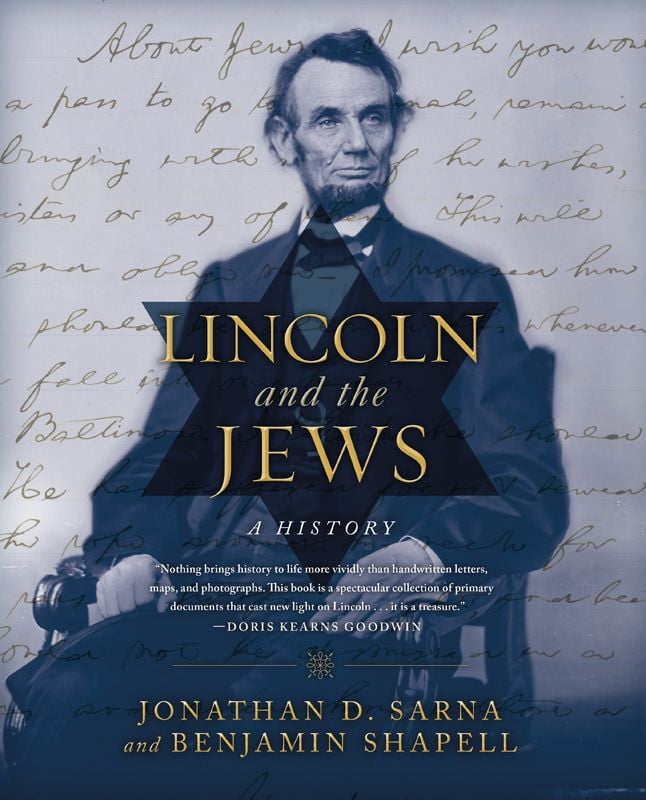
Lincoln and the Jews: A History by Jonathan D. Sarna charts a transformative period in American life, following Abraham Lincoln’s evolving relationship with Jewish Americans from his earliest encounters on the Western frontier to his final days as president. Sarna excavates a network of personal bonds, policy decisions, and moments of advocacy that reveal Lincoln’s unique engagement with Jewish individuals and communities during a period of unprecedented change for both Jews and the nation.
The Early Republic and Lincoln’s Formative Years
Born in 1809 in Kentucky, Lincoln grew up in a region devoid of a significant Jewish presence, yet his earliest impressions of Jews came from the King James Bible, which saturated his upbringing in a devout Calvinist household. The Hebrew Bible shaped Lincoln’s worldview and furnished him with a vocabulary of justice, providence, and moral striving. The family’s Baptist tradition imbued him with an ethic of egalitarianism and fatalistic belief in predestination. During Lincoln’s formative years, the Jewish population in the United States hovered around three thousand, clustered in East Coast port cities. Jews stood outside the civic mainstream, often facing legal restrictions and social suspicion.
First Encounters and Emerging Friendships
Lincoln’s move to Illinois in the 1830s initiated contact with Jewish settlers. Julius Hammerslough, a German-Jewish immigrant and businessman, represents one of Lincoln’s early Jewish acquaintances in Springfield, where commerce and civic life intertwined. These friendships germinated in a state where legal and political circuits created opportunities for diverse interactions. Lincoln encountered Louis Salzenstein, a Jewish merchant, and gradually entered a wider network that included clients, neighbors, and political allies. The friendships carried a significance beyond simple collegiality—these relationships symbolized new possibilities for religious minorities in the American republic.
Abraham Jonas and the Power of Political Friendship
Abraham Jonas, an English-born Jew who settled in Quincy, Illinois, emerged as a pivotal figure in Lincoln’s life. Jonas and Lincoln built a friendship rooted in shared values, legal practice, and political ambition. Jonas’s activism extended from local Masonic lodges to the state legislature, where he aligned himself with Lincoln’s Whig and later Republican loyalties. Jonas championed Lincoln’s rise, helped secure his nomination for president, and supported him through personal and political crises. Their correspondence—unusually affectionate for the period—demonstrates trust and strategic alliance. When Jonas’s son, a Confederate prisoner of war, needed leave to visit his dying father, Lincoln’s intervention illustrated loyalty transcending wartime divisions.
Jews and the Rise of American Pluralism
As the Jewish population swelled to more than 150,000 by the Civil War, Jewish Americans became increasingly visible in civic, economic, and military life. Lincoln’s openness to Jews reflected and accelerated this transformation. He saw Jews as citizens entitled to participation, rights, and recognition. Lincoln appointed Jews to government positions and military chaplaincies, notably insisting on the inclusion of Jewish clergy for Jewish soldiers—a precedent in the federal government. His appointments rested on competence and character, not confessional conformity. The phrase, “We have not yet appointed a Hebrew,” expressed his conscious commitment to representation and equality within the federal system.
Religious Language and the Expansion of American Identity
Lincoln’s language evolved with his experience. Early in his public career, he invoked America’s Christian identity as a matter of course. Later, his rhetoric broadened, especially during the war years, to accommodate Jews and other non-Christians as insiders. His Gettysburg Address’s reference to a nation “under God” opened space for pluralism. Lincoln’s biblical literacy empowered him to draw from Jewish sources in his public statements, casting the Civil War as a trial with spiritual dimensions resonant across faith traditions. His speeches and writings registered this shift, situating Jews and other minorities within the moral fabric of the republic.
Confronting Prejudice and Defending Rights
Antisemitism pervaded American society in the mid-nineteenth century, surfacing in military, political, and social spheres. Lincoln met these challenges directly. In December 1862, General Ulysses S. Grant issued General Orders No. 11, expelling “Jews as a class” from his military department. Jewish communities protested vigorously. Lincoln, receiving appeals from Jewish leaders and his own confidantes, acted decisively to revoke the order. His stated principle—rejecting collective punishment and upholding individual accountability—aligned with his deepest beliefs about citizenship and justice. Lincoln’s interventions affirmed the legal and moral standing of Jews as Americans, modeling presidential responsibility during crisis.
Jewish Participation in the Civil War
Jewish Americans served in the Union Army and the Lincoln administration. Lincoln’s appointments of Jewish military chaplains responded to the needs of Jewish soldiers and their families. Jewish doctors, such as Issachar Zacharie, contributed both medically and diplomatically, earning Lincoln’s confidence and access. Zacharie, as Lincoln’s chiropodist and informal emissary, provides an example of personal loyalty intersecting with political service. Jewish businessmen supplied military regiments and participated in wartime mobilization. Their engagement with the Union cause marked a new phase of integration and recognition.
Memorialization and the Jerusalem Connection
The book documents the convergence of Lincoln’s legacy with Jewish memory. After his assassination, Jewish communities mourned his death, participated in his funeral rites, and commemorated his commitment to justice and inclusion. Mary Todd Lincoln recalled her husband’s wish to visit Jerusalem, a city symbolizing spiritual fulfillment and moral reckoning. Streets in Jerusalem bear Lincoln’s name, a testament to his impact across continents and generations. Sarna locates the roots of this veneration in Lincoln’s active promotion of Jewish inclusion within American civic life and his efforts to expand the boundaries of national belonging.
A Philosophy of Equality
Lincoln’s encounters with Jews reinforced his philosophy that the rights guaranteed by the Declaration of Independence extended across religious and racial boundaries. He championed equality as a structural imperative for the nation, pursuing policies that incrementally dismantled legal barriers for both Jews and Black Americans. Sarna traces how this philosophy shaped key moments in Lincoln’s presidency, from the Emancipation Proclamation to the appointment of Jewish officials, demonstrating a practical commitment to the “new birth of freedom” Lincoln envisioned.
Jewish Advocacy and Political Mobilization
Jewish Americans organized for political advocacy, using their networks to petition the president, seek redress, and secure appointments. The Lincoln administration responded to these appeals with action, including the reversal of discriminatory policies and the promotion of Jewish civic participation. Jewish leaders such as Simon Wolf and Isaac Markens documented these efforts, preserving a record of the era’s advances in rights and recognition. The organizational tactics and public appeals of Jewish Americans during the Lincoln era established models for minority advocacy that would resonate in subsequent generations.
Personal Narrative and Historical Discovery
Sarna weaves biography, historical research, and documentary analysis into a narrative that illuminates overlooked relationships and moments. Letters, photographs, and artifacts create a textured portrait of Lincoln’s world, revealing the interplay between private sentiment and public action. The collection of correspondence—sometimes intimate, sometimes formal—grounds Lincoln’s commitments in lived experience, foregrounding the human stakes of policy and rhetoric. Lincoln’s “other letters,” often addressed to friends, supporters, or lesser-known associates, serve as a lens through which readers glimpse the president’s humanity and capacity for empathy.
Visual Evidence and Historical Presence
The book employs visual sources—letters, photographs, lithographs, and ephemera—to anchor its argument and illustrate the lived reality of Jewish participation in nineteenth-century America. These images substantiate the book’s claims, demonstrating the presence and influence of Jews in political, military, and civic spaces. The artifacts testify to relationships that shaped outcomes, influenced policy, and fostered belonging. Through visual documentation, Sarna bridges the gap between archival research and narrative history, giving readers tangible evidence of convergence and transformation.
Legacy and Historical Impact
Lincoln’s legacy endures as a touchstone for Jewish-American identity and civic aspiration. His actions set precedents for inclusion, religious liberty, and equal rights. The Jewish memory of Lincoln crystallized in the rituals of mourning, naming, and public commemoration, affirming his status as a friend, protector, and advocate. Sarna concludes by tracing the continuing influence of Lincoln’s relationships with Jews on American political culture, legal practice, and collective memory. The transformation of Jews from outsiders to insiders, observed within Lincoln’s lifetime, signals a broader movement toward pluralism in American history.
Narrative Convergence and Moral Agency
The convergence of Lincoln’s personal commitments, public actions, and historical context produced outcomes that reshaped the status of Jews in America. The book argues for the power of moral agency in history, showing how individual choices within systems of power produce lasting change. Lincoln’s advocacy, informed by friendship, principle, and vision, yielded advances for religious minorities and reinforced the nation’s promise of equality.
A Model for Civic Inclusion
Lincoln’s era demonstrates that civic inclusion emerges through the combination of advocacy, leadership, and institutional reform. The interplay of Jewish agency and presidential action created new norms of participation and representation. By weaving Jews into the fabric of American public life, Lincoln and his Jewish contemporaries established models for future struggles over rights and belonging. Sarna’s account places these developments at the center of the American narrative, challenging assumptions about the boundaries of citizenship and the engines of historical change.
Continuity and Change in the American Story
As the Jewish presence in the United States expanded, the structures of government, law, and public culture adapted. Lincoln’s presidency marks a watershed in this process, fusing personal relationships with structural reforms. The impact of these changes endures in contemporary debates over pluralism, religious liberty, and national identity. Sarna’s work asserts the foundational importance of these moments, tracing a through-line from Lincoln’s personal friendships to the ongoing transformation of American society.
Sustaining the Promise
Lincoln’s life and legacy remind readers of the promise embedded in the American experiment—the expansion of rights, the affirmation of human dignity, and the ongoing project of inclusion. The history of Lincoln and the Jews captures the tension and possibility inherent in this project, inviting readers to recognize the power of leadership, advocacy, and vision in shaping outcomes. Through detailed research, narrative craftsmanship, and interpretive clarity, Sarna situates Lincoln’s relationships with Jews at the heart of American history, asserting their enduring relevance for future generations.

About the Book