The Dead Sea Scrolls Deception
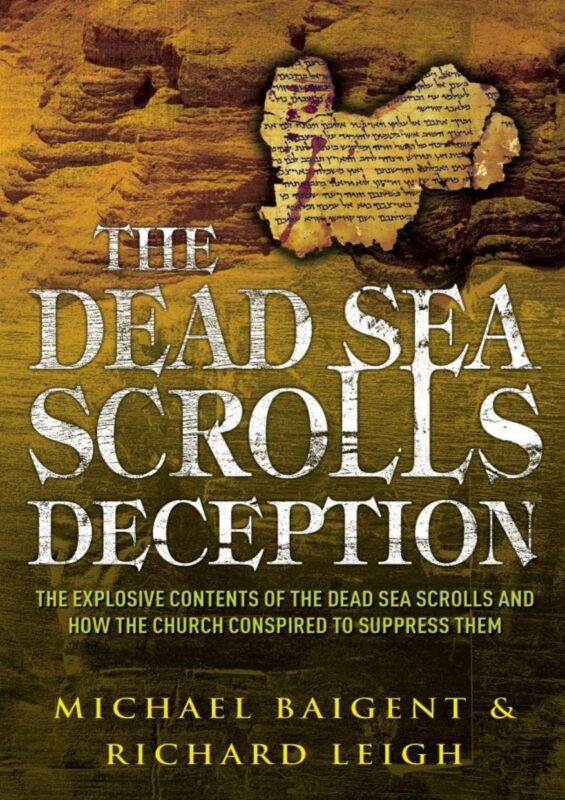
The Dead Sea Scrolls Deception by Michael Baigent and Richard Leigh uncovers the dramatic story of the discovery, control, and contested meaning of the ancient manuscripts found near the Dead Sea in 1947. The narrative examines the political, religious, and academic forces that surrounded the Scrolls, following their journey from the caves of Qumran into the secretive vaults of ecclesiastical and institutional power. This account reveals the intricate web of intrigue that shaped the fate of some of the oldest biblical manuscripts ever found, and explores the stakes for the world’s largest religious traditions.
Discovery in the Desert: Qumran and the Origins of a Mystery
In the spring of 1947, Bedouin shepherds searching for a lost goat stumbled across clay jars hidden in a remote cave near the Dead Sea. Inside lay leather scrolls wrapped in decaying linen, untouched for nearly two millennia. The manuscripts soon became a source of fascination and profit, traded through local antiquities dealers and churchmen who grasped their potential value. As the scrolls entered the antiquities market, academics, government officials, and religious authorities vied for access and control. What knowledge waited within these ancient texts? Who stood to gain—or lose—by shaping their meaning?
From Discovery to Monopoly: Scholars, Secrecy, and Institutional Power
A small cadre of scholars, centered on the Dominican-run École Biblique in Jerusalem, gained custody of the majority of the Dead Sea Scrolls. Through a series of strategic maneuvers, including the acquisition of scrolls by intermediaries and the consolidation of materials at the Rockefeller Museum, this team secured the scrolls behind locked doors and within a closed intellectual circle. Their control enabled the formation of an official “consensus” regarding the identity and beliefs of the Qumran community, the dating of the scrolls, and their relationship to Judaism and early Christianity.
This consensus did not emerge from broad scholarly engagement, but rather through the authority of access: the custodians could examine, translate, and interpret the texts, while external researchers encountered institutional resistance and exclusion. Decisions made in the “Scrollery”—the locked room at the Rockefeller Museum—determined what the world would learn and when.
Ecclesiastical Interests and the Vatican’s Involvement
The Vatican’s interest in the Dead Sea Scrolls shaped the agenda of interpretation and publication. Catholic scholars played decisive roles in managing access and guiding the direction of research. The École Biblique, under Dominican leadership, exercised its influence both through its scholarly output and through direct ties to the Holy See.
Church authorities recognized that the content of the scrolls, if widely known, could reshape the understanding of Christian origins. The Qumran texts revealed beliefs, practices, and messianic expectations that closely paralleled those described in early Christian literature. These parallels raised urgent questions: How did the Dead Sea Scrolls intersect with the roots of Christianity? Did they challenge received dogmas about Jesus, his followers, and the evolution of the early Church?
Political and Military Entanglements: The Scrolls in the Modern Middle East
The history of the Dead Sea Scrolls unfolded amid the turbulence of the late British Mandate, the birth of the state of Israel, and ongoing conflict in the region. Control over the physical manuscripts shifted with changing borders and the fortunes of war. As the West Bank and East Jerusalem moved from Jordanian to Israeli authority during the 1967 Six-Day War, the scrolls and the museum housing them became the focus of international dispute and national pride.
Local antiquities dealers, Bedouin tribes, and national authorities negotiated, bargained, and sometimes resorted to force in pursuit of these treasures. The stakes extended beyond archaeology: whoever controlled the scrolls could help determine the future of national narratives, religious claims, and scholarly reputations.
Challenging the Consensus: Robert Eisenman and the Quest for Historical Truth
Independent researchers such as Robert Eisenman, a prominent scholar of Middle East religions, broke with the established consensus by advancing a new interpretation of the Dead Sea Scrolls. Drawing on parallels between the Qumran texts and early Christian writings, Eisenman traced connections between the scrolls’ authors and figures like James, the brother of Jesus. He asserted that the movement behind the scrolls was deeply enmeshed with the origins of Christianity and that its leaders espoused a vision of messianic, even revolutionary, Judaism.
Eisenman’s scholarship illuminated the gap between the consensus position and the emerging evidence. He argued that the prevailing interpretation rested on authority and tradition rather than open, rigorous debate. As he and others pressed for transparency, they encountered institutional pushback and professional risk. What forces compelled the guardians of the consensus to defend their position with such vigor? What did they fear would happen if new voices reinterpreted the scrolls?
The Battle for Access: Suppression, Revelation, and the Opening of the Archive
For decades, the team controlling the Dead Sea Scrolls restricted access to both texts and photographs, requiring outside scholars to accept interpretations filtered through the consensus. Attempts to challenge or bypass these barriers provoked accusations of heresy, professional ostracism, and public controversy. The analogy to Umberto Eco’s monastery in The Name of the Rose became apt: a select few controlled knowledge, maintained secrecy, and dictated terms of debate.
This situation persisted until the early 1990s, when the Huntington Library in California broke the monopoly by releasing its photographic archive of the Dead Sea Scrolls to the public. Suddenly, independent scholars could study the texts firsthand, subjecting decades of interpretations to scrutiny and revision. This watershed event transformed the landscape of biblical studies and forced the custodians of the consensus to defend their methods, findings, and legacy.
Unveiling the Contents: What the Dead Sea Scrolls Reveal
The Dead Sea Scrolls comprise biblical manuscripts, apocryphal writings, community rules, sectarian commentaries, and apocalyptic prophecies. Some date as early as the third century BCE, others extend into the first century CE. The collection includes multiple copies of books from the Hebrew Bible, including Isaiah, Psalms, and Deuteronomy, as well as unique compositions such as the Community Rule, the War Scroll, and the Copper Scroll, an inventory of hidden temple treasures.
Within these texts, scholars discern evidence of a community obsessed with ritual purity, strict law observance, communal ownership, and messianic expectation. The language and ideas in the scrolls reveal close affinities with both Pharisaic Judaism and early Christianity. Terminology such as “Teacher of Righteousness,” “Wicked Priest,” and “Sons of Light” echo themes later developed in Christian scripture.
The scrolls also refer to violence, martyrdom, and a willingness to resist outside authority. Their worldview envisions an imminent apocalypse, a messiah who will redeem Israel, and a final battle between good and evil. As researchers analyze these texts, they trace patterns that link the Qumran community to movements such as the Zealots and Sicarii, who fought against Roman occupation, and to the early followers of Jesus.
Early Christianity Reconsidered: Implications for Religious History
Baigent and Leigh assert that the Dead Sea Scrolls compel a reexamination of the origins of Christianity. The proximity of Qumran ideas to those expressed in the teachings of Jesus and his immediate circle suggests that Christianity emerged from a vibrant, conflicted, and diverse Jewish milieu. Paul’s letters, the Gospels, and Acts of the Apostles allude to divisions and debates that parallel the controversies recorded in the scrolls.
The figure of James, the brother of Jesus, emerges as a pivotal leader whose approach to law, temple, and messianic expectation aligns closely with the Qumran community. The authors contend that the establishment of orthodoxy, as later defined by the Church, involved a process of selection, adaptation, and suppression—choices influenced by both theology and power politics.
Scholarly Battles and the Fight for Transparency
The struggle over the Dead Sea Scrolls catalyzed one of the twentieth century’s great academic controversies. Careers rose and fell as scholars navigated the politics of access and interpretation. Journalists, governments, and even intelligence agencies entered the fray, recognizing that the fate of these texts held ramifications for identity, legitimacy, and belief.
Baigent and Leigh follow the stories of individuals who risked professional exile to expose the limits of the consensus, the tactics of obfuscation, and the urgency of open inquiry. The eventual release of the scrolls’ contents enabled new lines of research, but also revealed the depth of institutional entrenchment and the persistence of controversy.
Conclusion: The Legacy and Future of the Dead Sea Scrolls
The Dead Sea Scrolls Deception frames the story of the scrolls as an epic contest over knowledge, faith, and historical truth. The book argues that only through transparency, access, and relentless inquiry can scholars and the public approach an authentic understanding of these manuscripts. The legacy of the Dead Sea Scrolls continues to shape debates over the origins of Judaism and Christianity, the nature of religious authority, and the ethics of scholarship.
The scrolls endure as tangible links to a world of conflict, devotion, and radical expectation. Their journey from desert cave to global controversy underscores the enduring power of ancient texts to unsettle assumptions and provoke new questions. What new discoveries remain within these manuscripts? Who will shape the next phase of their interpretation, and what implications will emerge for the world’s faiths? The story of the Dead Sea Scrolls, and the battles fought over their meaning, persists as one of the most consequential episodes in the history of religion, archaeology, and intellectual life.
About the Book